

 Unicaus NEWS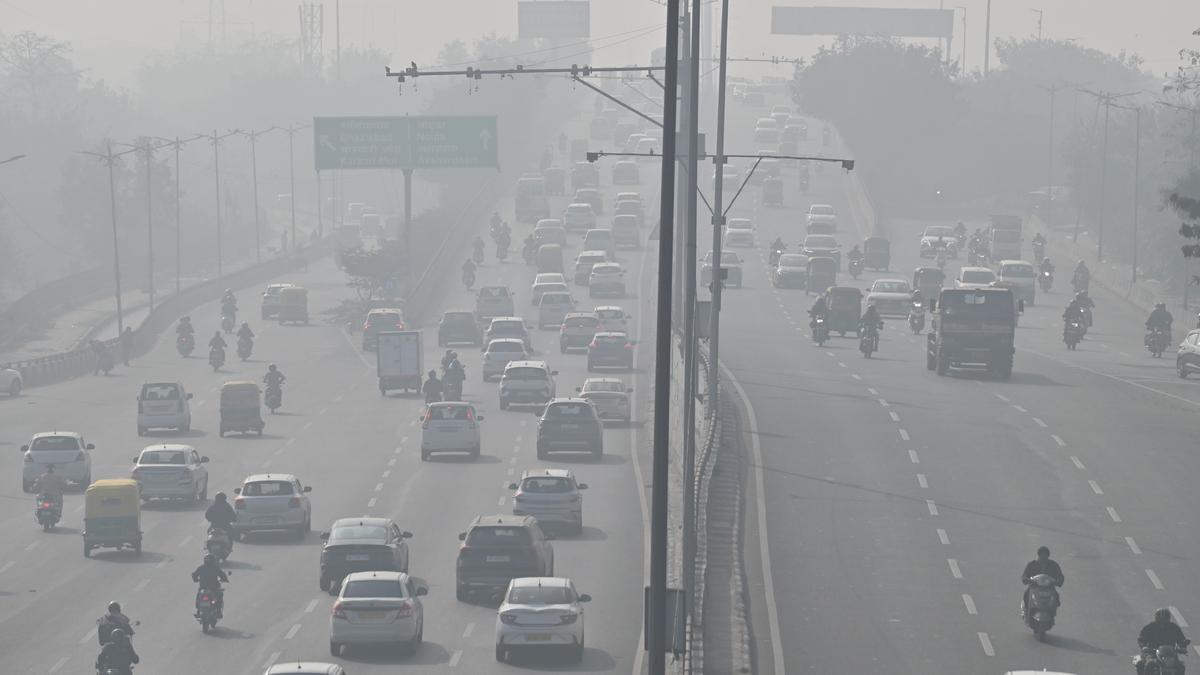
Vehicles commute through a dense layer of smog around the Gandhi Nagar area, in New Delhi on January 16, 2026. | Photo Credit: ANI
The air quality index (AQI) in Delhi, which was 343 at 4 p.m. on Thursday (January 15, 2026), rose to 354 at 4 p.m. on Friday (January 16, 2026), the officials said.
“Further, forecasts for weather ad meteorological conditions by the IMD/IITM indicate that due to slow wind speed, stable atmosphere, unfavourable weather parameters and meteorological conditions and lack of dispersal of pollutants, Delhi’s average AQI is likely to breach the 400-mark and enter the ‘severe’ category in the coming days,” a senior official said.
“Keeping in view the prevailing trend of air quality, AQI forecasts and to prevent further deterioration, the CAQM sub-committee on GRAP (Graded Response Action Plan) today took the call to invoke all actions as envisaged under Stage-III of extant GRAP with immediate effect in the entire NCR as a proactive measure,” the official said.
While GRAP 3 restrictions were revoked on January 2, 2026 after the air quality improved, several preventive and control measures under GRAP 1 and 2 continue across the NCR.
GRAP, which is implemented in Delhi-NCR, categorises air quality into four stages — ‘poor’ (AQI 201-300), ‘very poor’ (AQI 301-400), ‘severe’ (AQI 401-450) and ‘severe plus’ (AQI above 450).
Unfavourable meteorological conditions, along with vehicular emissions, stubble burning, firecrackers and other local pollution sources often push air quality in Delhi-NCR to hazardous levels during the winter season.
Published – January 16, 2026 06:39 pm IST