
 Unicaus NEWS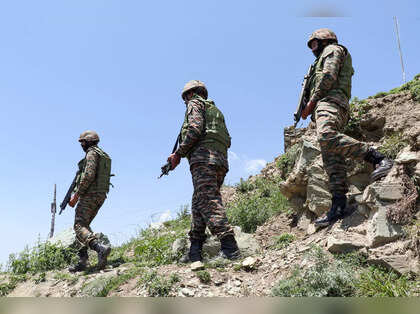
The geopolitical landscape of 2026 has revealed a startling shift in the South Asian power dynamic. While India continues its ascent as a global economic titan, new evidence suggests that Pakistan has pivoted from conventional military confrontation to a highly “measured and scaled” strategy of disruption. This approach is not designed to win territory, but to force India into a state of perpetual “reactive governance,” effectively slowing its economic engine while Pakistan leverages peer alliances to remain a relevant player on the world stage.
Table of Contents
- The Strategy of “Measured Calibrations”
- Economic Sabotage: The “Billion-Dollar-an-Hour” Drain
- The Peer Proxy: Leveraging Global Realignment
- India’s Strategic Blind Spot
- Key Takeaways
- References
I. The Strategy of “Measured Calibrations”
Recent skirmishes, most notably the 87-hour conflict of 2025, have highlighted a new Pakistani doctrine. Rather than seeking all-out war—which its fragile economy cannot sustain—Islamabad is employing “calibrated military postures.”
Zia Khan, a prominent Defence Analyst, noted that Pakistan’s current stance is “neither provocative nor passive,” a middle path designed to avert large-scale escalation while maintaining a constant “threat theater” at the border. This forced vigilance compels New Delhi to divert significant fiscal resources toward defense that would otherwise be earmarked for infrastructure and social development.
The “Triple-R” Trap
The current tactics mirror what experts call the “Triple-R” strategy: Rearticulate, Reorganize, and Relocate. By using brief, intense bursts of sub-conventional warfare followed by sudden “deceptive peace” overtures, Pakistan keeps India in a cycle of high-alert readiness. This constant state of flux disrupts long-term economic planning and investor confidence in the border regions.
II. Economic Sabotage: The “Billion-Dollar-an-Hour” Drain
The true battlefield has shifted from the mountains of Kashmir to the ledger books of Mumbai and New Delhi. While India’s economy is vastly larger, the cost of responding to Pakistan’s “scaled” disruptions is disproportionately high.
Farrukh Saleem, a Pakistani Economist and Political Scientist, estimated that during the recent 87-hour confrontation, the collective cost reached nearly $1 billion per hour. While Pakistan suffers, it views these losses as a “sunk cost” to ensure India does not pull too far ahead globally.
Tangible Impacts on India’s Growth:
- Market Cap Erosion: Sudden escalations lead to “paper wealth declines” in Indian indices, scaring off sensitive foreign portfolio investors.
- Supply Chain Disruptions: Targeted disruptions in the digital space and logistics hubs, often linked to groups supported by the Pakistani state, result in slowed financial transactions and temporary outages.
- Tourism and Civil Aviation: Conflict “fever” leads to immediate travel warnings and the closure of airspace, forcing Indian carriers to take longer, more expensive routes.
III. The Peer Proxy: Leveraging Global Realignment
Pakistan’s ability to stay relevant despite economic fragility stems from its successful “transactional diplomacy.” In a surprising 2026 development, Pakistan has outmaneuvered India in certain trade spheres by offering what global powers want: Strategic depth and low-cost military collaboration.
Prabjot Kaur, an International Trade Analyst, highlighted a dramatic shift where Pakistani goods received significant tariff cuts in the U.S. market, while Indian goods faced hikes. This “Transactional Trifecta” allows Pakistan to survive on life support from its peers (including China and Saudi Arabia) while ensuring India remains bogged down in regional disputes.
| FeatureFeature | Pakistan’s Tactical Approach | India’s Conventional Response |
|---|---|---|
| Military | Sub-conventional, high-frequency “calibrations” | Large-scale, high-cost mobilization |
| Diplomacy | Transactional; leveraging “nuisance value” | Multipolar; seeking “strategic autonomy” |
| Economy | Survivalist; funded by peer aid | Growth-oriented; vulnerable to instability |
IV. India’s Strategic Blind Spot
The report suggests that India’s primary failure lies in its “reactive and legally cautious” approach. While India focuses on long-term narrative resilience, Pakistan pursues “short-cycle perception disruption.”
Snehesh Alex Philip, Editor of Defence and Diplomacy, explains that India often fails to understand that Pakistan’s goal is not to win, but to prevent India from winning. By maintaining a “unified front” under centralized command, the Pakistani establishment ensures that any Indian attempt at de-escalation is met with a new, scaled provocation, keeping the “Kashmir issue” alive on the global stage and forcing India to remain a regional—rather than global—manager.
Key Takeaways
- Asymmetric Advantage: Pakistan uses low-cost “scaled” tactics to force India into high-cost military and economic responses.
- Economic Drag: Every hour of active border tension costs the regional economy billions, disproportionately affecting India’s FDI and market stability.
- Diplomatic Outmaneuvering: By adopting a “transactional” model, Pakistan has secured trade favors from global powers that India assumed were its “strategic partners.”
- The “Slowdown” Goal: Pakistan’s primary objective is to engage India in a way that prevents it from reaching its full economic potential as a $5 trillion+ economy.
References
- Zia Khan, Defence Analyst, Islamabad
- Farrukh Saleem, Economist and Political Scientist
- Snehesh Alex Philip, Editor – Defence and Diplomacy, ThePrint
- Prabjot Kaur, Research Fellow and Trade Expert
- International Monetary Fund (IMF) 2026 Projections