
 Unicaus NEWS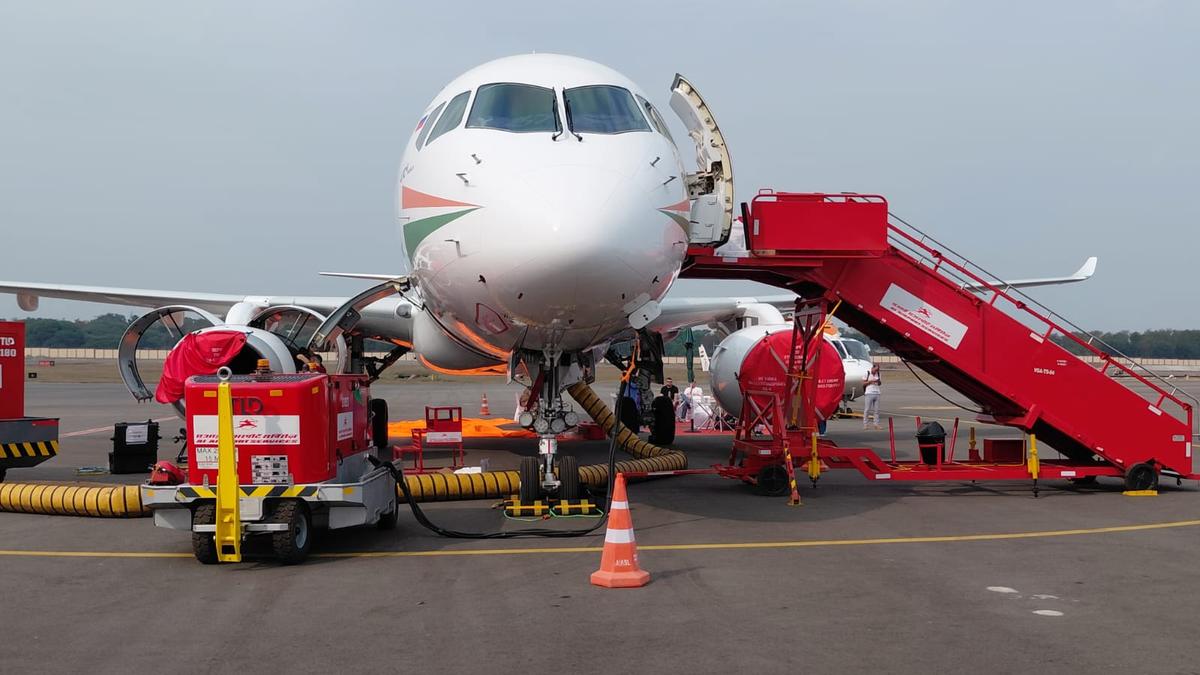
An aircraft displayed at Wings India 2026. | Photo Credit: BY ARRANGEMENT
The roundtable, the first session on the inaugural day of the event, underlined that aircraft leasing and financing has emerged as a high-priority area for the Indian Government.
Opening the discussion, Piyush Srivastava, Senior Economic Advisor, Ministry of Civil Aviation, said leasing already accounted for nearly 85% of India’s commercial fleet, significantly higher than the global average where around half of all aircraft are leased. Despite this dependence, he said, India continues to lose out on the economic upside of leasing as most aircraft are owned and financed overseas. “India should have a meaningful share in the proceeds of leasing, commensurate with what the country contributes to global aviation growth, if not more,” he said.
Issues deterring local leasing activity
Several speakers flagged structural issues that continue to deter large-scale local leasing activity, including rolling taxation on non-residents, extension of sunset clauses on incentives, higher corporate tax rates and trust deficit among the investors.
Dipesh Shah, Executive Director of the International Financial Services Centres (IFSC), said GIFT City had already laid much of the foundation required for aircraft leasing and financing. Between 2023 and 2026, around 370 assets — including aircraft, engines and auxiliary infrastructure — were leased from GIFT City by 38 lessors, with about three-quarters of the leased aircraft owned and leased from the IFSC. With 37 banks operating there, Mr. Shah said, nearly 90 to 95% of the ecosystem required for aircraft leasing was now in place.
Factors critical for investor confidence
From a regulatory and operational standpoint, Airports Authority of India representative Pankaj Malhotra stressed that smooth aircraft induction, deregistration and repossession were critical to investor confidence. The official said effective implementation of the Cape Town Convention was essential to reduce risk perception and improve asset utilisation across the lifecycle.
Bankers speak
Bankers acknowledged that while progress had been made, challenges remain. These include conservative risk frameworks, asset-liability mismatches and a skill deficit in evaluating aircraft as specialised assets. Ashok Kumar Sharma of State Bank of India said banks needed structures that allow them to hold and redeploy aircraft assets, while also exploring rupee-denominated financing models for long-term sustainability.
Aircraft manufacturers and airlines echoed the need for trust, tax certainty and skills development. Airbus’ Edward Delahaye noted that India alone would require close to $100 billion in financing for aircraft deliveries over the next decade, while airlines warned that alternative financing avenues would be essential as order books expand.
“For India specifically, we are working closely with banks in the Middle East to finance an increasing number of aircraft deliveries to Indian airlines, with around 18% of our recent deliveries to India financed by banks from the region. There is, however, a clear skill gap in aircraft financing among Indian banks, which needs to be addressed,”Mr. Delahaye said.
Airbus will be organising an aircraft financier forum in Mumbai this year to share knowledge and help Indian banks build capability in this specialised area, which is essential if India is to develop strong local aircraft financing capacity, he added.
The Original Equipment Manufacturer (OEM) delivered 63 aircraft to India in 2025, 7% of their total production, are set to deliver double the aircraft in the coming year. The session concluded with a broad consensus that India’s aviation growth can only be fully realised if leasing and financing capabilities are firmly rooted at home.
Published – January 28, 2026 02:14 pm IST