
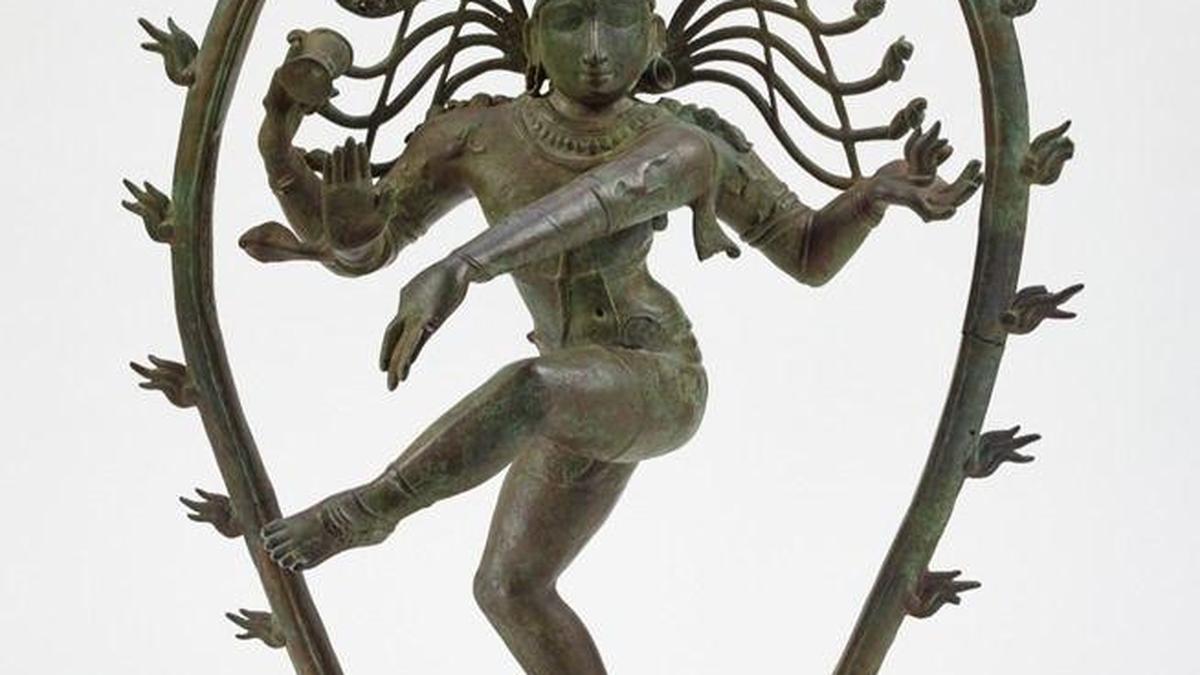

The Nataraja bronze sculpture from the 10th Century. | Photo Credit: Special Arrangement
The Chola-period sculptures of the Nataraja from the 10th Century and the Somaskanda from the 12th Century and Saint Sundarar with Paravai from the Vijayanagara period (16th Century) exemplify the rich artistry of South Indian bronze casting. These sculptures were originally sacred objects, traditionally carried in temple processions. The Shiva Nataraja, which is to be given on a long-term loan, will be displayed as part of the exhibition, ‘The Art of Knowing in South Asia, Southeast Asia, and the Himalayas.’
The Somaskanda sculpture from the 12th Century. | Photo Credit: Special Arrangement
Under a systematic review of its South Asian collections, the museum conducted a detailed investigation into the provenance of the three sculptures, scrutinising their transaction history. In 2023, in collaboration with the photo archives of the French Institute of Pondicherry (Institut Français de Pondichéry), museum researchers confirmed that the bronze sculptures had been photographed in temples in Tamil Nadu between 1956 and 1959. The Archaeological Survey of India reviewed these findings and affirmed that they had been removed in violation of Indian laws.
“The National Museum of Asian Art is committed to stewarding cultural heritage responsibly and advancing transparency in our collection,” museum director Chase F. Robinson said in a statement released by the Smithsonian.
The museum and the Embassy of India are finalising arrangements to formally mark the agreement. The return was made possible by the National Museum of Asian Art’s dedicated provenance team and curators of South and Southeast Asian Art, with the support of the photo archives of the French Institute of Pondicherry and numerous organisations, and individuals worldwide.
Saint Sundarar with Paravai from the Vijayanagara period (16th Century). | Photo Credit: Special Arrangement
“The decision of the Smithsonian Institution, US, to return the sculptures to Tamil Nadu marks a milestone in the international recovery of India’s stolen cultural heritage and stands as a clear validation of the Mutual Legal Assistance Treaty (MLAT)-based recovery strategy pursued by the Tamil Nadu Idol Wing [-CID]. We submitted documents and MLAT materials to the institution in 2022 during my tenure. The Somaskanda bronze is a 12th-Century Chola masterpiece, illicitly removed several decades ago from the Vishwanatha Swamy Temple at Alathur village in Thiruvarur district,” said K. Jayanth Murali, former Director-General of Police, Idol Wing-CID.
In 2017, heritage researcher and India Pride Project founder S. Vijay Kumar published detailed photographic matches using archival records from the French Institute of Pondicherry, conclusively linking all three bronzes — including the disputed Nataraja — to specific Shiva temples in Tamil Nadu. Despite the availability of this evidence, it has taken nearly eight years for institutional action to follow.
“The provenance papers themselves contained glaring red flags — no history prior to 1973, attempts to backdate the acquisition to 1972, and even customs documents listing the origin as Thailand. These issues were visible decades ago, not discovered recently. While the return of the Somaskanda and Sundarar-Paravai idols is welcome, the so-called long-term loan of the Nataraja is legally untenable. Temple bronzes are sacred, inalienable property, and this process must extend to other bronzes from Alathur and Veeracholapuram that remain in U.S. collections,” said Mr. Vijay Kumar.
Published – January 29, 2026 07:28 pm IST