 Unicaus NEWS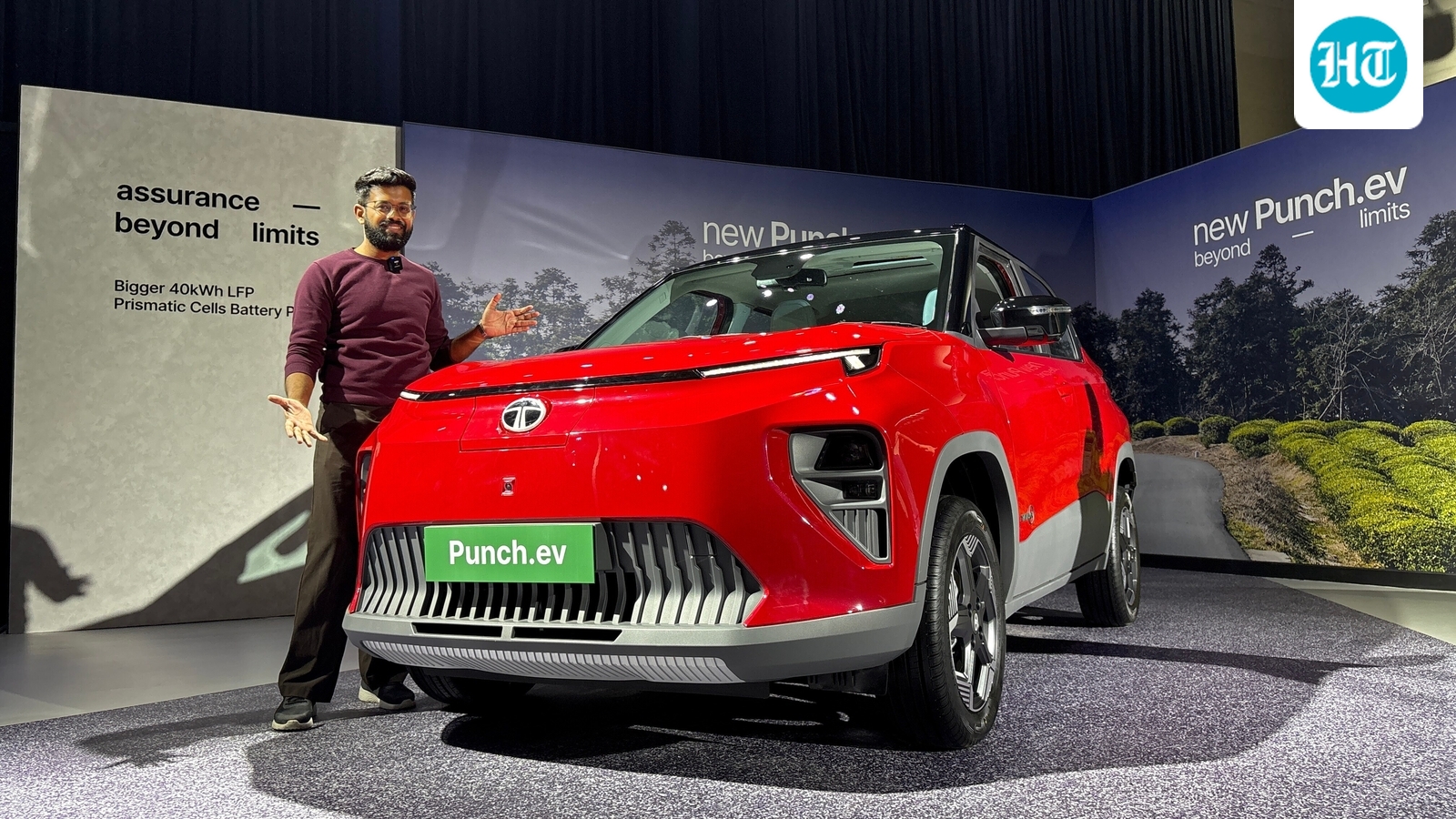
New Punch EV gets bigger battery, faster charging, improved tech, sharper pricing and a more efficient 6-in-1 e-drive unit.
The updated Tata Punch EV features revised lighting, new alloy wheels and key mechanical upgrades beneath the surface.
What stands out immediately is that this is not just a cosmetic facelift. The focus appears to be on addressing practical concerns, usable range, charging speed, long-term battery assurance and overall value. Here are five changes that, at least on paper and from this first interaction, seem to matter the most:
1) Bigger, denser battery with improved real-world range
The headline update is the introduction of a new 40 kWh LFP battery pack, replacing the earlier 35 kWh unit. It is rated for 468 km (ARAI), while the more realistic C75 range stands at around 355 km. For buyers who do not need that much range, there is now a 30 kWh option, offering an estimated real-world range between 265 km and 280 km. The older 25 kWh and 35 kWh packs have been discontinued.
Tata says the updated battery is denser and capable of handling ambient temperatures of up to 45 degrees Celsius. This is a particularly relevant detail for Indian conditions, where summer heat can affect EV performance.
2) Faster charging and improved home charging setup
The 40 kWh variant now supports 65 kW DC fast charging. Tata claims the battery can charge from 20 to 80 per cent in 26 minutes. A 15-minute top-up is said to add around 135 km of real-world range.
For home use, buyers get a 7.2 kW wallbox charger and a 3.3 kW portable charger. The wallbox now features an illuminated charging status indicator, a small but practical improvement for daily use.
(Also read: ₹85,000 in February”>Tata Altroz, Nexon offered with discounts of up ot ₹85,000 in February)
3) More usable technology as standard
Inside, the Punch EV gets a 10.24-inch touchscreen infotainment system and a 10-inch fully digital instrument cluster. Safety equipment such as six airbags, ESP, electronic parking brake with auto hold and ISOFIX mounts are standard across variants.
Higher trims add features like ventilated front seats, but a 360-degree camera is offered as standard equipment. Other features include wireless charging and connected car technology.
Another important addition is the High beam alert, which warns the driver if the high beam is on at lower speeds to avoid glaring oncoming traffic. At first look, the cabin feels more feature-complete even in the lower variants.
(Also read: Tata Punch EV new vs old: exterior, interior, battery size)
4) Pricing that spans a wider range
The updated Punch EV is priced from ₹9.69 lakh to ₹12.59 lakh (ex-showroom, introductory). The introduction of the 30 kWh and 40 kWh options allows buyers to choose based on budget and range requirements rather than being limited to a single battery size. Even the top-spec 40 kWh variant comes at a price that makes sense for the buyer who’d like their EV to have a respectable range within tighter budgets.
Within this price, the carmaker is offering a lifetime and unlimited-kilometre battery warranty. There is also a battery-as-a-service option that further lowers the upfront cost, though the long-term economics will depend on individual usage patterns.
5) New 6-in-1 e-drive unit
One of the more technical but important changes is the introduction of a redesigned 6-in-1 e-drive unit. Tata claims it is 50 per cent smaller and 28 per cent lighter than before, while being six per cent more efficient. It also uses 40 per cent fewer semiconductors and 30 per cent fewer high-voltage harnesses. In theory, this could improve packaging efficiency and potentially reduce complexity.
Beyond these changes, the Punch EV also gets revised headlamps, connected tail lamps, new alloy wheels and additional colour options. But from this first close look, the real story lies underneath, in the battery, charging upgrades and powertrain refinements.
However, these impressions are drawn without driving the vehicle. How the new battery performs in real-world conditions, how consistent the charging speeds are, and whether the efficiency gains translate into better on-road behaviour will only become clear after a proper test drive. For now, the updates look meaningful on paper and in person, but the final judgment will depend on how it drives.
-
Ryan likes to stay updated with the trends of the automotive and tech world. His hobbies include driving (should be obvious), learning new musical instruments (can play a little bit of everything) and singing.Read More