

 Unicaus NEWS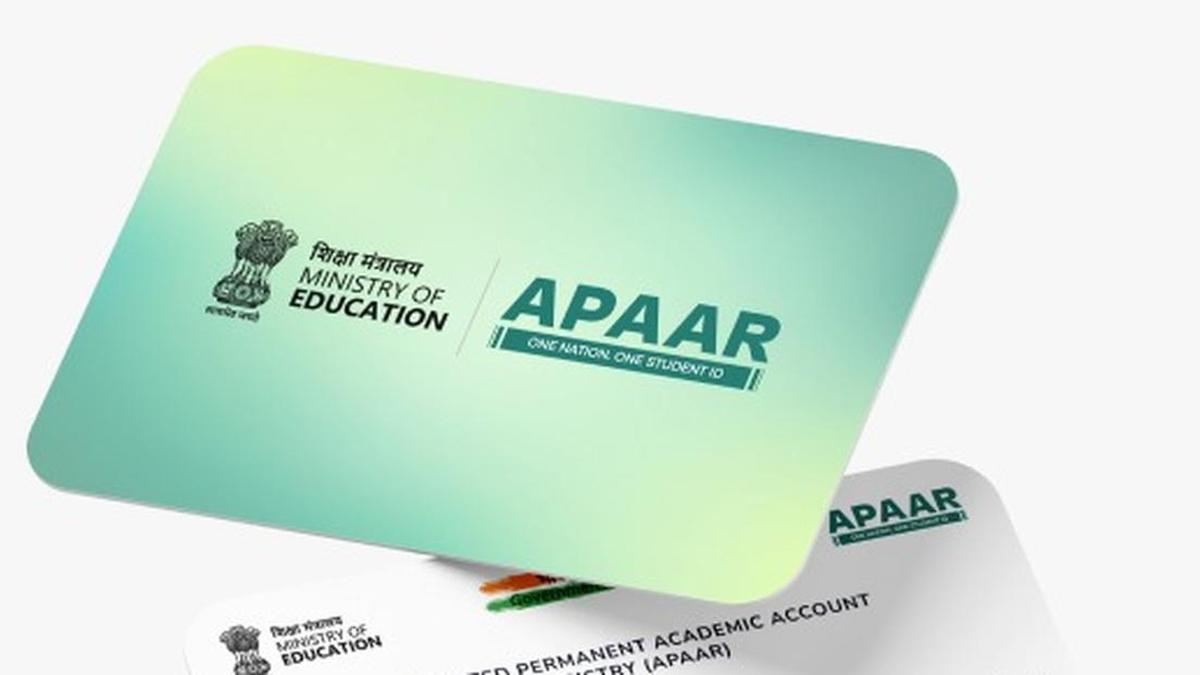
Image for the purpose of representation only. | Photo Credit: File
A Bench of Justice Sashikanta Mishra has directed the government to consider amending the consent forms so that such an option is made available to parents.
The High Court was hearing a petition filed by an elementary school student from Bhubaneswar and his parents, who said that the consent forms distributed by the school under the APAAR ID scheme did not provide an option to decline sharing Aadhaar details at the outset.
The petitioners noted that a clause in the consent form mentioned that consent could be withdrawn at any time. However, they argued that the clause, by its structure, required consent to first be given and only then withdrawn.
In its December 12 order, the High Court said, “The withdrawal of consent as per the last paragraph of the consent form cannot be treated as giving an effective right to the parent to protect his privacy because by such time the consent would already have been given.”
While noting the submissions of the Union Education Ministry that consent under the APAAR ID scheme was “entirely voluntary”, the court observed that the consent forms had “not been worded strictly in consonance with the avowed objective of making the scheme voluntary”.
“In other words, the model consent form does not appear to have been happily worded in this respect at all,” the court ruled. “If it is intended to be a voluntary act, appropriate provisions clearly specifying such fact ought to have been incorporated in the form by providing option to the parents to refuse to submit their consent or to opt out of it entirely,” it added.
The Bench noted that the petitioners had shared a model consent form incorporating an option for parents to refuse consent at the beginning, and said State authorities should consider this sample while amending the consent forms.
“Since the right to privacy is a fundamental right and though not absolute, can only be subject to reasonable restrictions, the same has to be protected and respected by the State at all costs,” the court said.
The High Court said it would take up the matter again after two months, when “necessary orders” would be passed.
The Automated Permanent Academic Account Registry (APAAR) was introduced by the Union Education Ministry in 2023 to implement its “one student, one unique ID” initiative. The government has said the scheme is intended to provide a lifelong 12-digit identifier for all school-enrolled students to store their academic accomplishments.
Consent forms under the scheme contain a clause requiring the APAAR ID to be shared and used for “limited purposes as may be notified by the Ministry of Education”.
The clause also notes that students’ personal identifiable information such as name, address, age, gender, date of birth and photograph “may be made available to entities engaged in various educational activities such as UDISE+ database, scholarships, maintenance academic records, and other stakeholders like Educational Institutions and recruitment agencies”.
The petitioners argued that this provision violated their right to privacy and was non-specific about the limits of the terms “limited purposes” and “stakeholders”.
Advocate Abhishek Jebraj, representing the petitioners, said of the December 12 order, “This judgment makes the fundamental right to privacy a more tangible reality for children across our country, at a time when individual privacy is too often sacrificed on the altar of collective convenience. It builds on the Supreme Court’s seminal Puttaswamy judgment, which first recognised the right to privacy.”
Published – December 13, 2025 04:32 pm IST