
 Unicaus NEWS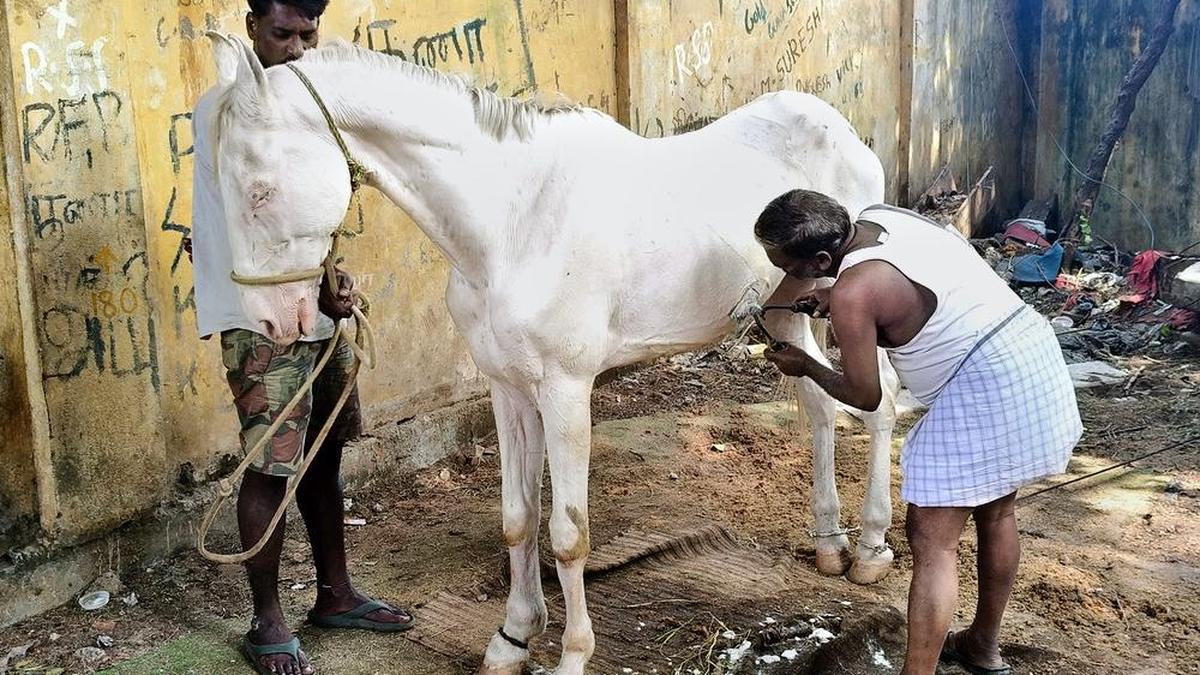
A horse ride at the beach is cherished by children and adults alike, but one rarely wonders where they go once the crowds thin out. Housed in makeshift shelters under the Chepauk, Lighthouse and Triplicane MRTS stations along the Chennai Beach-Velachery MRTS line, most of these horses have seen better days. Animal rights activists have time and again raised concerns about their upkeep, but their owners say the earnings from the rides are so little that they are unable to sustain themselves and the animals.
According to the owners, the horses used for joy rides are mostly native breeds, mainly sourced from Maharashtra, Odisha, Andhra Pradesh and Karnataka’s Mysore and Bijapur regions. Most of them are purchased after they undergo basic training and medications. The owners claim that the daily upkeep of a single horse costs about ₹500, with earnings of ₹1,000 on weekdays and around ₹2,000 on weekends.
K. Kumar, 35, who maintains horses under the Triplicane MRTS station, said the income from the horse rides does not amount to much and is not sufficient to feed his family. “These animals feed us, and we feed them. That is how it is,” he remarked.
Microchipping beach horses
It is concerning how these animals are maintained, says Shruti Vinod Raj, Member, Tamil Nadu Animal Welfare Board (TNAWB). In 2023, the TNAWB began microchipping beach horses to keep track of their health. As many as 122 horses were microchipped at the Marina, Chepauk, Lighthouse, Ripon Building, and Besant Nagar, in August 2023. At present, however, there are only 51 microchipped horses in the city, as per data from an inspection, Raj said, expressing apprehension that the remaining may have died or been sold.
“The Board is in the process of implementing a policy on beach horses to address these issues. The policy will outline regulations regarding horse maintenance, operating hours, and penalties for repeat offenders who fail to maintain their horses,” Raj said.
She added that horses are very sensitive animals and they should not be taken out between 11 a.m. and 4 p.m., as hot sand could damage their hooves and weaken them. While acknowledging that maintaining a horse is expensive, she insisted that owners must take better measures for their upkeep.
Colic, meaning severe abdominal pain, is very common among beach horses, and is caused by a lack of proper food, she said. “Horses should be rolled in the sand to prevent colic. This, however, cannot be done in makeshift shelters, causing many to eventually die,” she further said, adding that while some owners take genuine effort to care for their horses, many fail to do so due to financial constraints.
Lack of Shelter
R. Devaraj, a horse owner, claimed that during heavy rains, many like him are unable to shelter the horses, leaving them exposed to the elements. “The TNAWB provides food for the animals during the rainy season. Likewise, building sheds would benefit the animals,” he said.
To improve welfare of horses, the TNAWB has come up with a ₹3.5-crore proposal to prevent cruelty, and to help maintain beach horses with all necessary arrangements, including stables, treatment facility, feed and medicines, manpower, and veterinary specialists.