
 Unicaus NEWS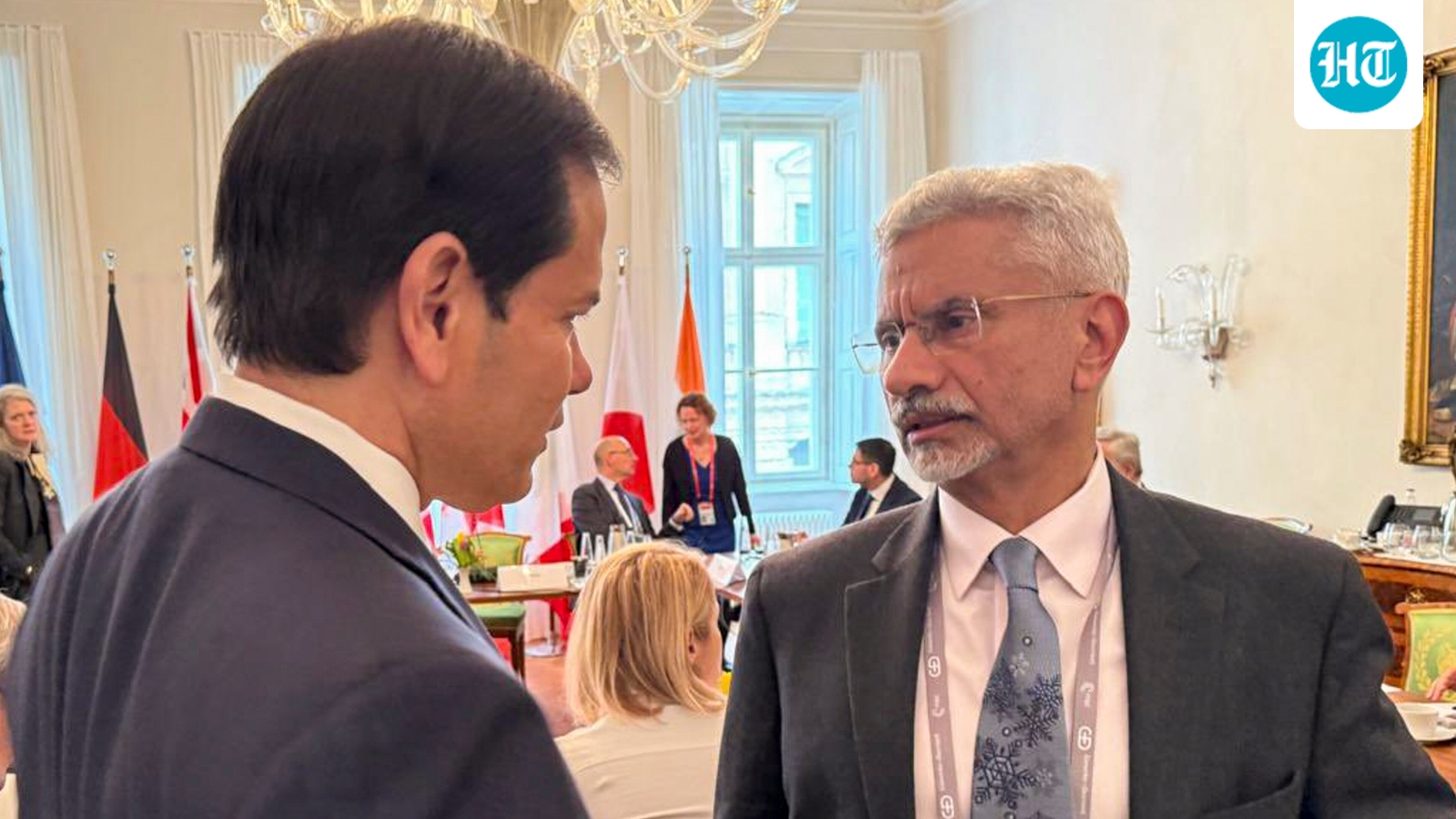
India’s external affairs minister S Jaishankar (R) with US secretary of state Marco Rubio during the 62nd Munich Security Conference in Germany on Feb 14. (Photo: X/@DrSJaishankar/PTI)
India’s external Affairs Minister S Jaishankar, however, skirted a direct answer in his separate session at the conference the same day, amid a political row over it in New Delhi.
Jaishankar maintained that India is “wedded to strategic autonomy”, at a time when the Congress-led Opposition has accused Narendra Modi’s government of “selling out under pressure”.
Finer details of the India-US trade deal are being worked out, after Trump announced the framework towards a deal on February 2, which was confirmed by Prime Minister Narendra Modi.
Trump has already removed the 25% tariff imposed as “penalty” for India’s purchase of Russian oil despite the war in Ukraine; and his Executive Order expressly states Delhi has agreed to not buy the oil anymore. India has so far neither confirmed nor denied this bit.
The deal framework says the remaining 25% reciprocal tariff will be down to 18% once a formal Bilateral Trade Agreement (BTA) is concluded.
What Rubio said on India and Russian oil exactly
Rubio repeated the Russia assertion in Munich on February 14, though there was one word in his statement that could mean a caveat for now: “additional”. He was speaking about US sanctions on Russia as European nations press for the Americans to take steps to stop the Ukraine war.
“In our conversations with India, we’ve gotten their commitment to stop buying additional Russian oil,” Rubio mentioned.
Video below: Rubio speaks on the Russian oil-India issue after the 24-min mark
Jaishankar reiterates ‘market dymanics’ stance
Indian minister Jaishankar, in his session with German minister Johann Wadephul, did not directly confirm Rubio’s claim.
Instead, he emphasised yet again that India’s energy policy is dictated by market dynamics — a stance long held by his ministry and, by extension, the Indian government.
“Where the energy issues are concerned, this is today a complex market, oil companies in India — as in Europe, as probably in other parts of the world — look at availability, cost and risks, and take the decisions that they feel is in their best interests,” Jaishankar said.
Responding to questions on whether the US trade deal impacted India’s independent decision-making, Jaishankar said, “We are very much wedded to strategic autonomy, because it’s very much a part of our history and our evolution.” He added that India retains the option to make choices that may not agree with Western thinking.
Trump’s monitoring mandate
Trump removed the 25% punitive tariff on India via an executive order titled ‘Modifying Duties to Address Threats to the United States by the Government of the Russian Federation’.
It also tasks the US commerce secretary with tracking Indian oil purchases. If the secretary finds that India has “resumed directly or indirectly” importing Russian oil, the 25% punitive tariff can be re-imposed.
Delhi-based strategic affairs expert Brahma Chellaney has noted that while the “penalty” is gone for now, the monitoring mandate creates a “clear trigger” for tariffs to snap back. He estimated that replacing discounted Russian crude with market-priced US oil, coupled with higher transport costs, could add $4 billion annually to India’s oil import bill.
Commerce minister Piyush Goyal, India’s main negotiator for the US deal, has mentioned that a shift towards US energy is in “India’s own strategic interests” for diversification of sources. Goyal insisted that the deal itself “won’t discuss who will buy what and from where”.
The joint statement on the trade framework specifies that India will purchase $500 billion worth of energy and other items from the US over the next five years.
These points, specifically on the Russian oil, have led to criticism from the opposition, led by Congress leader Rahul Gandhi: “It appears Trump has a chokehold on PM Modi.”
Shiv Sena (UBT) MP Priyanka Chaturvedi has described the agreement as “treacherous” and “one-sided”. Parliament has been stalled for days now over demands for a full debate on the deal.
Former foreign secretary Nirupama Menon Rao has offered a more measured analysis. She said the trade-deal arrangement shows India’s strategic autonomy is being “stress-tested”, though Washington continues to negotiate with India due to its undeniable importance.
Russia, meanwhile, has said it’s not heard about the “stop oil” condition from India yet.