

 Unicaus NEWS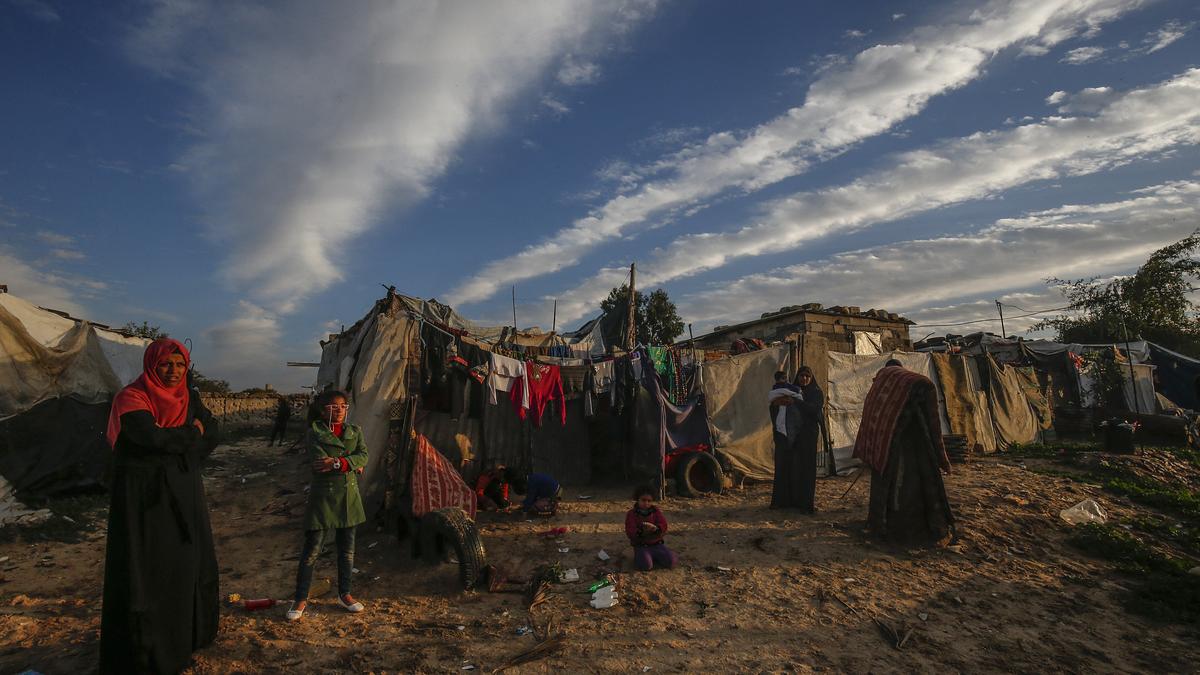
The crisis has been described by UNCTAD as the most severe economic crisis ever recorded, wiping out 69 years of human development. File | Photo Credit: AFP
Also read: Mass displacement, hunger, and death toll in Gaza
This economic devastation, coupled with widespread structural damage and a severe fiscal crisis, has erased decades of development and left the region facing an unprecedented humanitarian challenge.
Gaza’s GDP fell to just $362 million in 2024, with cumulative losses across 2023 and 2024 reaching 87%. GDP per capita has plunged to $161, among the lowest worldwide dropping to just 6.4% of its 2005 peak.
The economic crisis extended beyond GDP figures. Inflation surged to 238%, and unemployment reached 80%. As a direct consequence, all 2.3 million people living in the enclave fell below the poverty line. This crisis has been described by UNCTAD as the most severe economic crisis ever recorded, wiping out 69 years of human development.
Also read | A worsening humanitarian crisis in Gaza- A timeline
Following Israel’s no-holds-barred aggression, by April 2025, roughly 70% of all structures in Gaza had been damaged or destroyed, including factories, homes, hospitals, schools, banks, and key infrastructure for energy, water, telecommunications, and agriculture. Satellite analysis shows night-time luminosity across Gaza, an indicator of economic activity, fell 73% between October 2023 and May 2025.
The fiscal situation in all of the occupied Palestinian Territory also deteriorated significantly. Between 2019 and April 2025, Israel withheld or deducted $1.76 billion in fiscal transfers, equivalent to 12.8% of Palestinian GDP in 2024. Public debt and arrears also rose to around $4.2 billion.
By the end of 2024, the GDP of the occupied Palestinian Territory had fallen to 70% of the 2022 level. The GDP in 2024 was $10,959.6 million, a significant drop from $15,635.0 million in 2022. This decline pushed the GDP back to its 2010 level. GDP per capita in the occupied Palestinian Territory fell to 2003 levels, erasing 22 years of economic progress in just 15 months. The national Human Development Index is projected to fall from 0.716 to 0.643, erasing nearly 25 years of progress.
The devastation extends across the occupied Palestinian Territory. The West Bank is experiencing its sharpest economic downturn on record, driven by movement restrictions, insecurity, and loss of productive capacity.
The humanitarian fallout is acute. Food-security data shows that Gaza’s population has been pushed progressively into emergency and famine-like conditions. Between December 2023 and March 2024, the proportion of people in IPC Phase 5 (Catastrophe) nearly doubled from 17% to 30%. By September–October 2024, the phase distribution shifted slightly as access fluctuated, but extreme deprivation persisted: 6% remained in Catastrophe, 31-49% in Crisis, and 31-44% in Emergency.
The situation was projected to worsen sharply. From May to September 2025, up to 32% of Gaza’s population is expected to face Catastrophe (IPC Phase 5), while 58% will be in Emergency (IPC Phase 4) levels associated with excess mortality and starvation.
Compared with other west asian countries, the latest available poverty headcount data places the West Bank and Gaza at 29.2%, which ranks among the higher-poverty territories, only below countries facing protracted conflict, such as Yemen (48.6%) and the Syrian Arab Republic (35.2%).
UNCTAD estimates that rebuilding Gaza will require more than $70 billion and calls for a durable ceasefire, urgent humanitarian access and sustained international financing.
The data was sourced from UNCTAD, World Bank and Integrated Food Security Phase Classification
Published – November 26, 2025 11:19 pm IST