

New Delhi – Preliminary forensic examination of drone debris recovered after the recent Pakistani airspace violations suggests the use of Turkish-made “assist drones,” the Ministry of External Affairs (MEA) revealed today. This finding provides an early indication of the type of technology being deployed by Pakistan in its attempts to probe Indian defenses and gather intelligence.
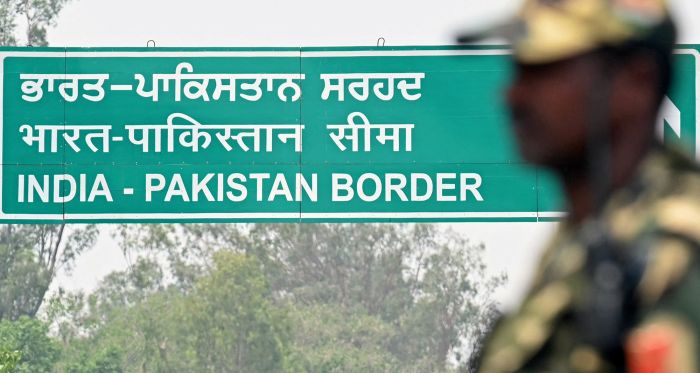
On the intervening night of May 8th and 9th, 2025, the Pakistan military launched approximately 300 to 400 drones across 36 locations along the western border, from Lelay to Sir Creek. These large-scale aerial intrusions were accompanied by firing of heavy caliber weapons and aimed at targeting Indian military infrastructure.
Indian armed forces successfully detected and neutralized a number of these intruding drones using both kinetic and non-kinetic means. Following the neutralization, debris from the downed drones was collected for detailed forensic analysis.
During a briefing that included inputs from Colonel Qureshi and Wing Commander Singh, the MEA spokesperson stated that these preliminary forensic reports point towards the drones being Turkish “assist drones.” While the term “assist drone” can encompass various types of unmanned aerial vehicles designed for support roles, the context of their deployment in a large-scale intrusion targeting military infrastructure suggests a potential use for reconnaissance, surveillance, or even as decoys to test air defense systems.
The MEA spokesperson reiterated that the possible purpose of these extensive aerial intrusions was indeed to test India’s air defense (AD) systems and gather intelligence on their capabilities and deployment. The identification of Turkish-origin drones, even in preliminary reports, adds an international dimension to the nature of the equipment being utilized by Pakistan in its cross-border activities.
Further detailed forensic examination is being undertaken to gain a more comprehensive understanding of the drones’ capabilities, specifications, and any other relevant information that can be gleaned from the wreckage. This analysis is crucial for India to assess the evolving nature of the aerial threats emanating from Pakistan and to adapt its counter-drone strategies accordingly.
The use of a large number of drones, potentially of foreign origin, in a coordinated manner across a wide swathe of the border represents a significant tactic. It highlights the increasing reliance on unmanned systems in modern border skirmishes and the need for robust counter-drone capabilities.
The MEA’s early disclosure of the suspected origin of the drones underscores the seriousness with which India views these violations and the importance of understanding the technology being employed by the adversary. The ongoing forensic work will likely provide more definitive conclusions regarding the drones’ capabilities and their intended roles in Pakistan’s aggressive actions on the border.