

No industry is more critical here than steel.
A chance to lead
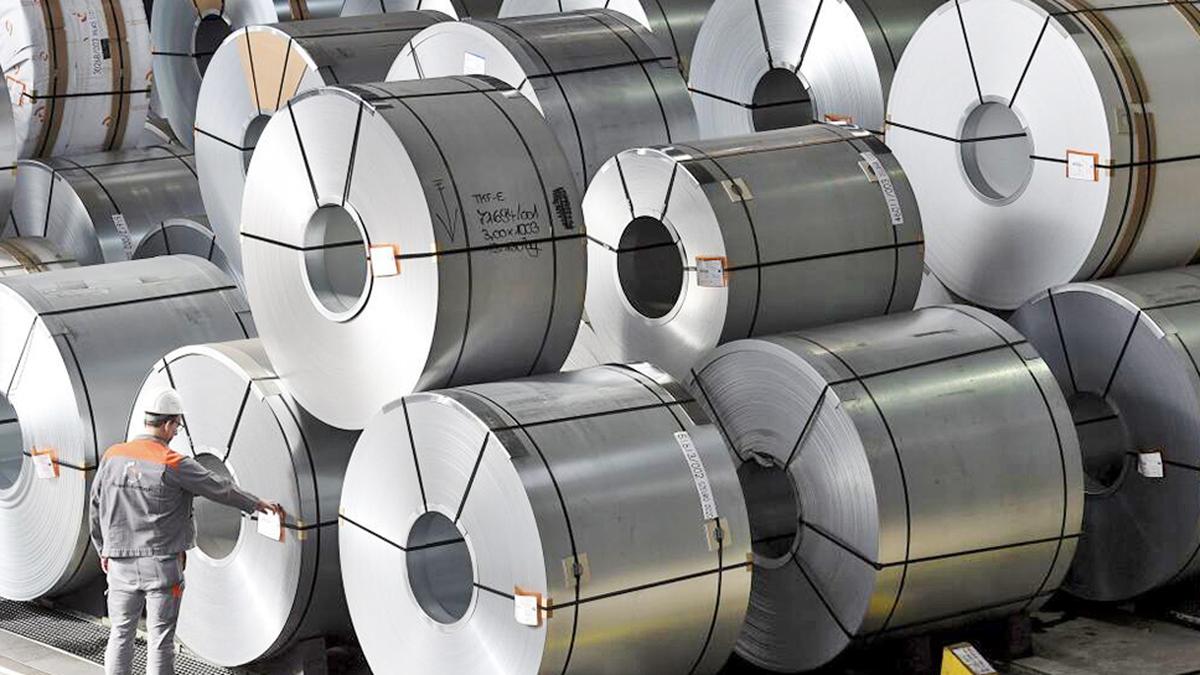
As one of the largest growing economies, the steel sector is the cornerstone of India’s growth, driving infrastructure and industrial development. In fact, to reach the country’s latent potential, steel production would need to more than triple from the current approximately 125 million tonnes a year to more than 400 million tonnes by mid-century. This is unprecedented growth in the given time and will surely come at a cost. The sector accounts for around 12% of the country’s carbon emissions today, largely due to its continued reliance on coal.
Much like other emerging economies, India faces a twin challenge of ensuring continued development, while meeting long-term climate targets.
Vital to achieving both of these goals will be avoiding locking in high carbon infrastructure. The investments made in the steel sector today will determine the long-term outlook of the steel industry. Absence of ambition on the transition could lock in billions of dollars of carbon inefficient technologies. This would not only be environmentally disastrous but also render the Indian economy unattractive in the medium to long term.
Global markets have spoken. Around the world, we are seeing countries take important strides to transition the steel sector. China, for example, is slated to ramp up its scrap-based secondary steel making production and investment in green hydrogen to reduce reliance on coal in steel making.
Meanwhile, the European Union has been on the de-carbonising journey for around two decades. Its Carbon Border Adjustment Mechanism (CBAM) is driving the shift to cleaner steel making for those exporting steel to the region.
Countries unable to demonstrate low-carbon production will face steep border charges, risk losing access to premium export markets and being called out as laggards in energy transition that the world really needs to make. Early movers in green steel will secure a decisive competitive advantage. India’s steel sector cannot afford to delay. These warnings have long been noted by India’s steel sector, which is already taking steps in the right direction. Tata Steel has piloted injection of hydrogen in blast furnaces, scaled renewable power purchase agreements, and explored carbon capture solutions. Meanwhile, JSW Steel and JSPL are exploring green hydrogen integration, while the Steel Authority of India Limited (SAIL) is modernising blast furnaces and exploring low-carbon production routes.
This change has been driven from the very top of companies. It requires bold strategic choices and sustained investment in innovation. And while this progress is important, the sector can and should be doing more.
It must move quickly from pilots to demonstration plants, and then to full-scale near zero technologies. Small- and medium-steel manufacturers also have to adapt to the reality of climate emergency by adopting best available technologies and raw materials to produce more carbon efficient steel.
The sector should no longer be investing in business-as-usual high carbon intensive blast furnace technology. All new capacity needs to be low to near zero carbon, as soon as possible.
Policy progress so far
Making these bold moves requires responsible executives and boards to have confidence in the trajectory of the sector. This is where consistent policy signals to guide long-term industrial planning come into play.
India has made important strides to set direction for the steel sector. The release of the government’s Greening Steel Roadmap in September last year set a practical pathway for the sector’s decarbonisation. This publication of Green Steel Taxonomy in December 2024 made India the first country to formalise such a definition. The National Green Hydrogen Mission, expanding renewable capacity and carbon emission intensity targets for 253 steel units under the Carbon Credit Trading Scheme (CCTS), demonstrates momentum.
Yet, a year on from the Taxonomy launch, the policy incentives to really shift investment away from coal-based blast furnaces are yet to materialise and India risks being the only country to continue to add expensive age-old technologies in its economy.
The barriers to green steel are significant but solvable: limited supply and the high cost of green hydrogen; insufficient renewable energy dedicated to industry; limited availability and the informal nature of the scrap market in India; consistent and assured availability of reasonably priced natural gas as the transition fuel; identification and development of natural carbon sinks for sequestration; lack of long-maturity, low-cost debt for green steel projects and the need to de-risk them; and the need for workforce upskilling and technology support. Many of these are challenges of policy and investment, areas where India has demonstrated rapid transformation when it wanted to, as seen in renewable energy over the past decade.
To seize this opportunity, we need the government to act as a fair regulator for the sector and set clear, stringent short-, medium- and long-term carbon emission targets for industry to plan its capital investments. This would include rolling out the carbon price regime at the earliest, which would provide an appropriate mechanism for dispersing this cost of green steel through the value chain.
In Europe we have seen that near zero emission technologies could become viable only after the carbon price reached $90-$100 a tonne of CO2. India can learn from this experience when it comes to scheduling its own carbon emission targets.
We need to see the Green Steel Taxonomy socialised well, creation of a domestic market through a public procurement policy for green steel and promotion of greener products with appropriate certification mechanisms and labelling in place.
Natural gas will be a transition fuel for the steel industry as it moves towards hydrogen-based production. The government needs to make natural gas availability for the steel sector a priority. Companies would find it difficult to afford infrastructure for green electricity, green hydrogen or pipelines for natural gas or pipelines for evacuation of captured CO2 on their own. The government needs to set up hubs in key areas for development of green steel where costs of this infrastructure can be shared.
With low-carbon manufacturing capacities having a capital intensity which is approximately 30% to 50% higher, these policies are expedient and become urgent in the Indian paradigm. Steel producers may need some fiscal support too, to make this transition possible. The smaller players will definitely need some additional support to ensure that the transition is equitable.
A strategic imperative
Green steel can no longer be optional. It is central to India’s climate goals, economic future, and global leadership in sustainable industrialisation. India has already demonstrated global leadership in renewable energy deployment, climate diplomacy, and clean-tech scaling. Steel is now the next frontier: a critical test and an unprecedented opportunity.
By combining decisive corporate action with a robust, market-aligned policy framework, India can decarbonise steel, secure economic competitiveness, and shape global industrial standards.
Sanjiv Paul is a steel industry veteran and a former Vice-President of Safety, Health and Sustainability at Tata Steel