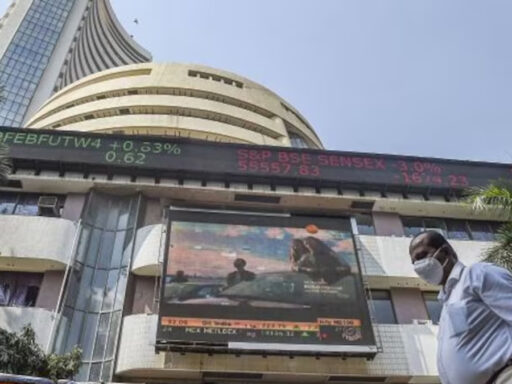

Trade experts have said that striking down of Trump tariff will result in countries that already have trade deals with the U.S. to re-examine them, and also called for India to do the same regarding its Interim Agreement that is yet to be signed. | Photo Credit: Getty Images/iStockphoto
The Supreme Court on February 20 found that Mr. Trump’s use of the International Emergency Economic Powers Act to impose tariffs on other countries exceeded his authority as President, and so struck the tariffs down.
Impact on trade deals
Trade experts have said that this will result in countries that already have trade deals with the U.S. to re-examine them, and also called for India to do the same regarding its Interim Agreement that is yet to be signed.
“The ruling invalidates country-specific “reciprocal tariffs” and fentanyl-linked duties imposed on imports from major trading partners,” Ajay Srivastava, founder of the think-tank Global Trade Research Initiative said. “The decision effectively renders recent trade deals initiated or concluded by the United States with the UK, Japan, the EU, Malaysia, Indonesia, Vietnam and India one-sided and useless. Partner countries may now find reasons to dump these deals.”
The Hindu has reached out to the Ministry of Commerce and Industry seeking a comment on whether India would be re-examining the Agreement. This report will be updated if and when a response is received.
Other tariffs in play
Soon after the Supreme Court’s ruling, Mr. Trump said that he would be imposing a baseline 10% tariff on imports from other countries under Section 122 of the Trade Act of 1974. This section and Act empowers the President to “address certain fundamental international payment problems through surcharges and other special import restrictions”, according to a factsheet issued by the White House.
Under this, the U.S. would impose a 10% ad valorem duty on imports into the U.S. for a period of 150 days starting from February 24.
Steel and aluminium still hit
The U.S. also has other tariffs in place, such as those under Section 232 of the U.S. Trade Expansion Act of 1962.
“It would need to be seen how President Trump could still use other laws like Section 232 to enhance/keep tariffs for covered products outside of this decision,” Krishan Arora, Partner and Indirect Tax and India Investment Roadmap Leader at Grant Thornton Bharat said.
Under the Section 232 tariffs, the U.S. has imposed a 50% tariff on imports of steel and aluminium. These tariffs will remain, and data shows they could continue to have an impact on India.
Aluminium and steel exports, taken together, form the fourth-largest group of exports for India to the U.S. Further, since electronics and pharmaceuticals are exempt from the tariffs, aluminium and steel are the second-largest export group on which tariffs are applicable, following precious and semi-precious stones.
Exports to the U.S. of these items fell nearly 66% in December 2025, as per the latest trade data, in response to the tariffs.
De minimis tariffs also still remain
The U.S. in August 2025 suspended the ‘de minimis’ exemptions it had granted imports of items valued at less than $800 per person per day. This meant that the import of such items, ranging from textiles to toys, cosmetics, and electronic accessories, would attract the country-specific duties based on their origin.
Following the Supreme Court’s decision on February 20, Mr. Trump issued an executive order saying that he has determined “it is still necessary and appropriate to suspend duty-free de minimis treatment… including for shipments sent through the international postal network”.
This has an impact on India because a number of small exporters and e-commerce players used to use this de minimis route to send items to customers in the U.S. duty-free.
Published – February 21, 2026 12:05 pm IST