
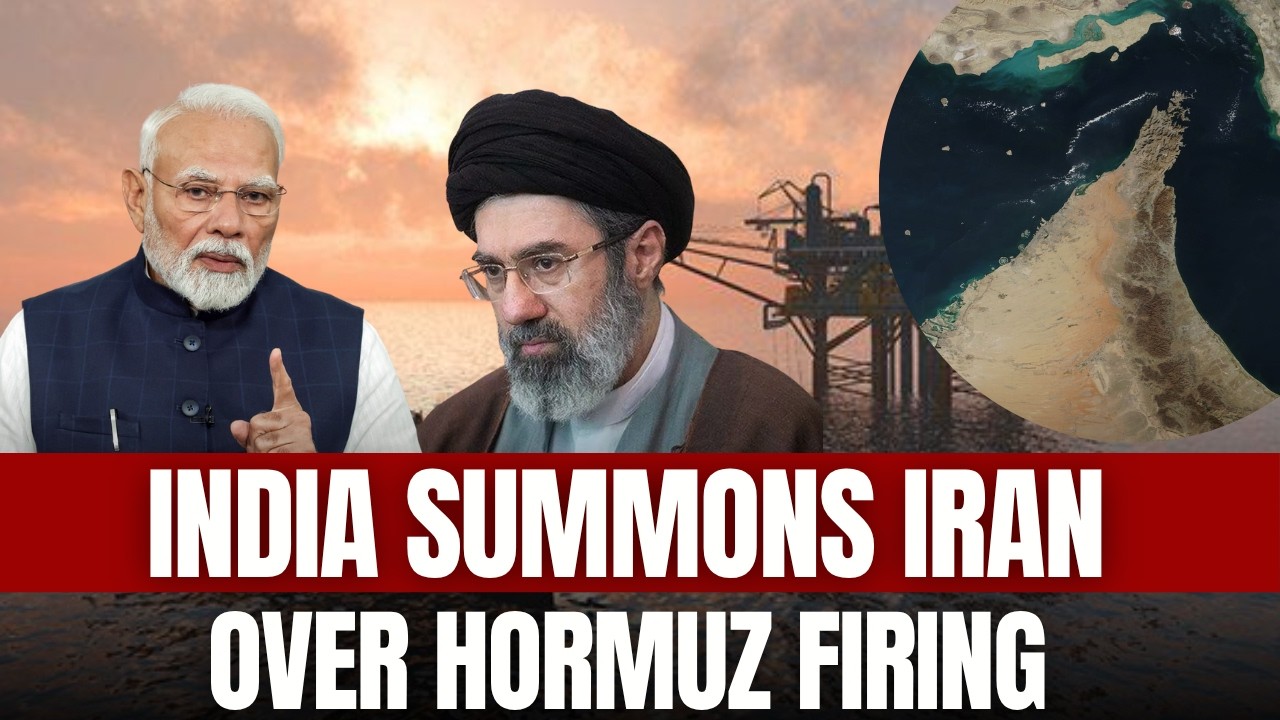
This report synthesizes verified developments regarding the maritime incident in the Strait of Hormuz on April 18, 2026, from an Indian strategic and diplomatic viewpoint.
NEWS INDEX: STRATEGIC HIGHLIGHTS
- INCIDENT: Iranian Revolutionary Guard Corps (IRGC) gunboats fired on Indian-flagged vessels near the Strait of Hormuz.
- SHIPS TARGETED: Sanmar Herald (VLCC) and Jag Arnav (Bulk Carrier) confirmed fired upon; both safe and returned to the Persian Gulf.
- SUCCESSFUL TRANSIT: Desh Garima successfully cleared the Strait; it is the 10th Indian vessel to do so since March.
- DIPLOMATIC ACTION: Indian Foreign Secretary Vikram Misri summoned Iranian Ambassador Mohammad Fathali to lodge a “strong protest.”
- KEY STANCE: India maintains that maritime safety is non-negotiable but continues to engage Iran as a “friendly nation” to resolve the “communication gap.”
DETAILED REPORT & ANALYSIS
1. The Incident: Firing in the Chokepoint
On the morning of April 18, 2026, the maritime security environment in the Persian Gulf escalated significantly. Following a brief period of regulated passage, Iran reimposed a total blockade of the Strait of Hormuz in retaliation for ongoing U.S. naval restrictions on Iranian ports.
Two Indian-flagged vessels were directly impacted by kinetic action:
- Sanmar Herald: A Very Large Crude Carrier (VLCC) carrying approximately 2 million barrels of Iraqi crude. Reports indicate it was approached by two IRGC gunboats 20 nautical miles northeast of Oman and fired upon.
- Jag Arnav: A bulk carrier transporting urea. Both vessels reported being targeted by warning shots or small arms fire (one report noted a bullet striking a bridge window).
Following the firing, these vessels, along with several others including the Desh Vibhor, Desh Vaibhav, and Desh Suraksha, performed sharp U-turns to return to safer anchorages within the Persian Gulf.
2. Successful Navigation: The Case of Desh Garima
Amidst the chaos, the Desh Garima, operated by the Shipping Corporation of India (SCI), managed to successfully transit the Strait on April 18. Carrying 31 Indian seafarers and a cargo of crude, the vessel is currently en route to Mumbai with an expected arrival of April 22. This successful passage highlights a fragmented security situation where some vessels are cleared for transit while others are repelled.
3. Indian Diplomatic Response
New Delhi acted swiftly to address the safety of its mariners. Foreign Secretary Vikram Misri summoned the Iranian Ambassador to express “deep concern.”
- The Protest: India emphasized that while it understands the regional geopolitical tensions, the safety of merchant shipping and Indian seafarers is a red line.
- The Iranian Response: Ambassador Fathali described the incident as a “communication gap” rather than a targeted hostile act against India. He reiterated that India is a “reliable partner” and that Indian vessels are generally exempted from the transit tolls and restrictions applied to “hostile” nations.
4. Current Status and Mitigation
As of April 20, 2026, approximately 14 India-flagged vessels remain in the Persian Gulf awaiting safe passage. To prevent further “misunderstandings,” India has reportedly shared a pre-clearance list of 21 specific vessels with Iranian authorities.
The Indian Navy continues to monitor the situation from the Gulf of Oman, where it maintains a presence of destroyers and frigates, though they are currently positioned outside the immediate Strait to avoid direct confrontation with Iranian coastal batteries.