
SPECIAL REPORT: THE INDIAN VIEWPOINT
NEW DELHI / WASHINGTON — Diplomatic tensions have reached a fever pitch following recent social media activity by the U.S. President. By amplifying a post that characterized the world’s two most populous nations as “hell-holes” and attacked the integrity of the Indian diaspora in the American technology sector, the administration has ignited a firestorm of criticism across the Indian subcontinent.
1. Analysis of the “Hell-Hole” Comments
The remarks, which surfaced on April 23, 2026, were not just a critique of immigration but a direct affront to the national dignity of India and China.
- The Narrative: The President shared content alleging that U.S. hiring mechanisms are “set up to run by Indians and Chinese” and that immigrants arrive from “some other hell-hole on the planet.”
- The Subtext: By targeting birthright citizenship and framing Indian tech professionals as an “internal mechanism” takeover, the rhetoric seeks to delegitimize the contributions of the 4.5 million-strong Indian-American community.
- Indian Reaction: Domestic media and political analysts have labeled the comments “racist” and “myopic,” noting that such disparagement of a “Major Defense Partner” is unprecedented in modern diplomacy.
2. The Case for an India-China “Strategic Detente”
While the India-China border remains a point of high friction (LAC), the “America First” isolationism—now dubbed the “Donroe Doctrine”—is creating a new geopolitical vacuum.
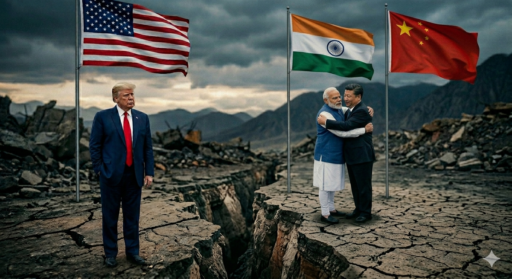
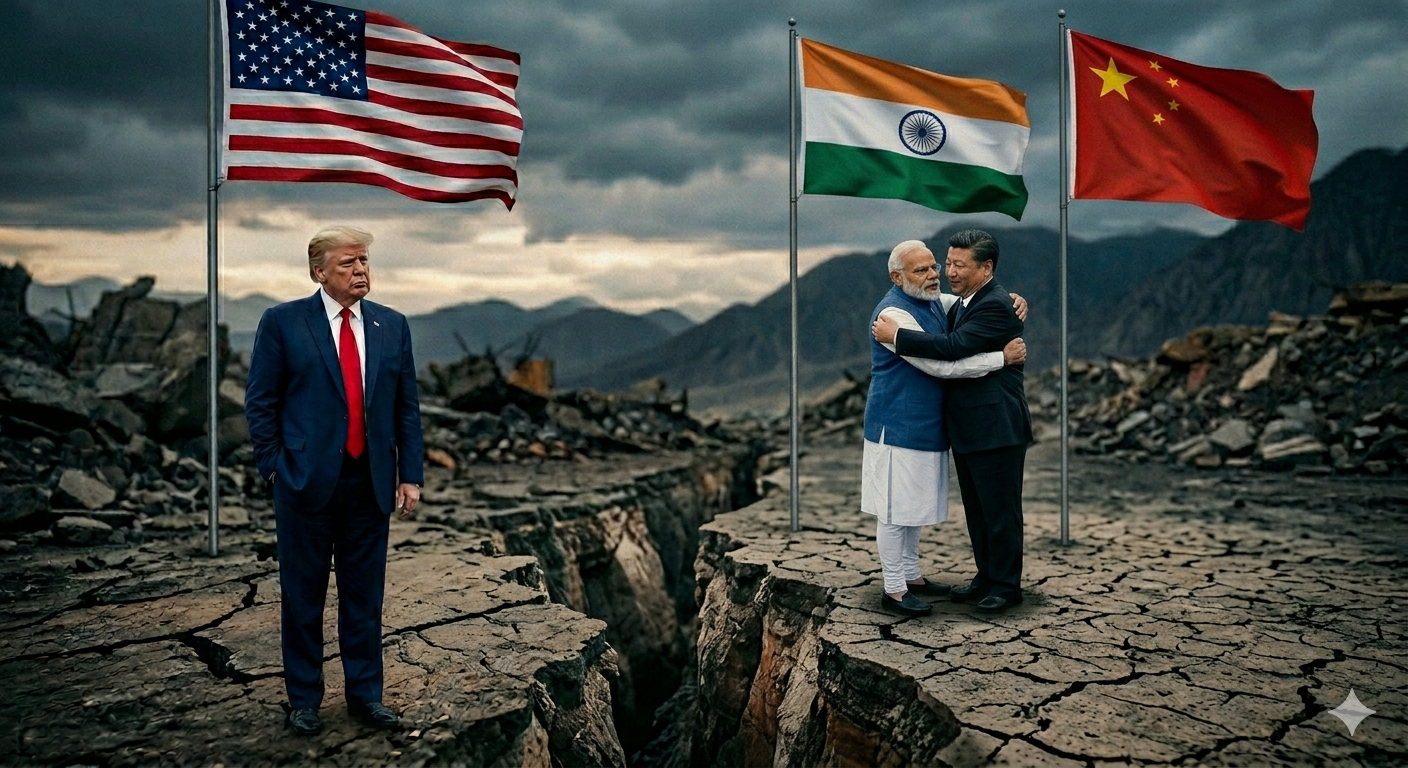
- Common Ground in Disrespect: For the first time in decades, both New Delhi and Beijing find themselves collectively maligned by Washington. This “shared grievance” is fueling a nascent school of thought: that India and China must find a way to stabilize their own neighborhood to avoid being “ruled” or “isolated” by Western whims.
- Defense Partnership Potential: Proponents of a “Multipolar World” argue that if India and China resolved their border disputes, they would effectively “rule” the global economy and defense landscape of the 21st century. An India-China defense understanding would render U.S. presence in the Indo-Pacific redundant, effectively isolating the U.S. to its own hemisphere.
3. Isolate America: The Rise of the Global South
India’s viewpoint is increasingly focused on Strategic Autonomy.
- Economic Realism: With the U.S. threatening to revoke birthright citizenship and tighten H-1B corridors, India is accelerating its “China-plus-one” strategy, but with a twist—normalizing trade with Beijing to reduce dependency on volatile Western policies.
- The “Hell-Hole” Paradox: Critics note the irony of the “hell-hole” label given that the U.S. tech economy is largely sustained by the very talent the President is attacking.