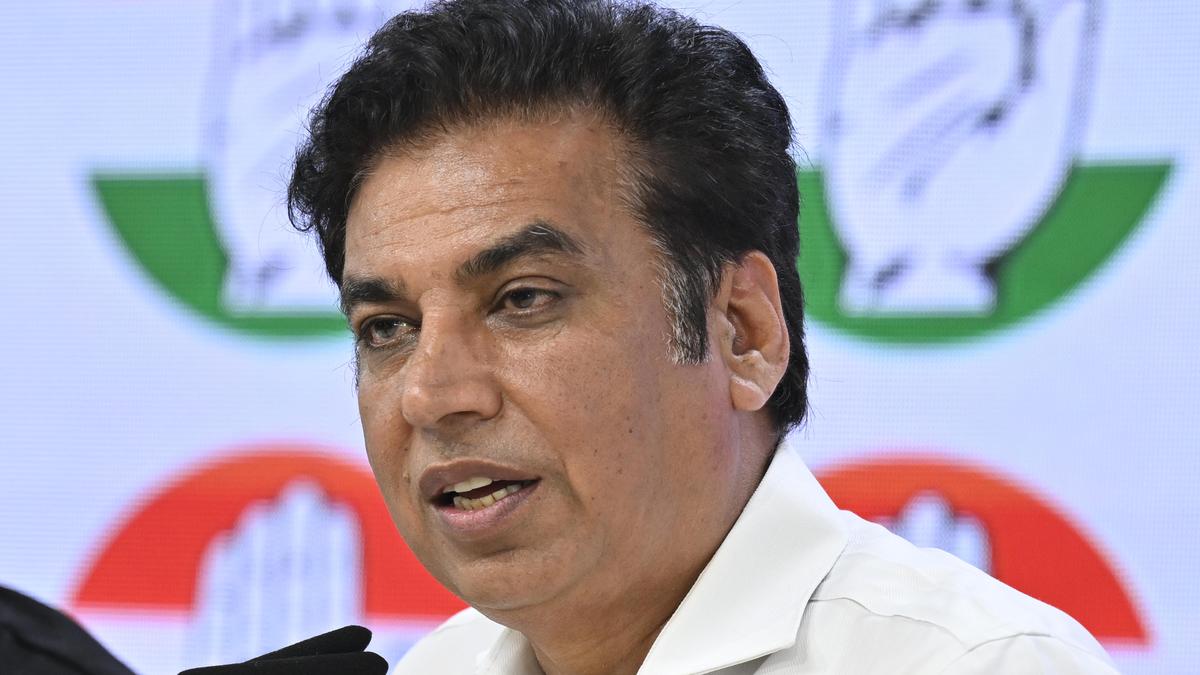

Delhi Congress chief Devender Yadav said the BJP government at the Centre did not allow the Opposition to have a detailed discussion on pollution in the Parliament and similarly Delhi Chief Minister Rekha Gupta did not call an all-party meeting on pollution despite multiple requests from the Congress. | Photo Credit: FILE PHOTO
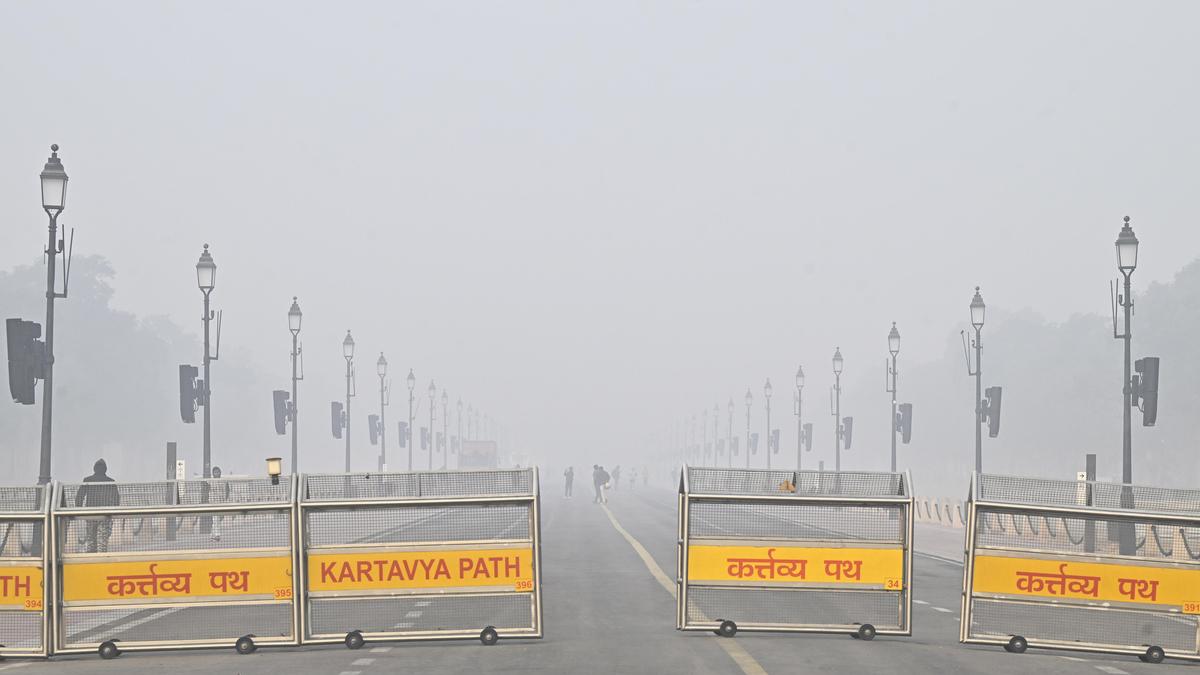
The December average stood at 294 in 2024, 348 in 2023, 319 in 2022, 336 in 2021, 332 in 2020, 337 in 2019, and 301 in 2015, as per the data by the Central Pollution Control Board (CPCB).
Delhi Congress chief Devender Yadav said the BJP government at the Centre did not allow the Opposition to have a detailed discussion on pollution in the Parliament and similarly Delhi Chief Minister Rekha Gupta did not call an all-party meeting on pollution despite multiple requests from the Congress. “After due deliberations and discussions on pollution in the Lok Sansad, Congress will compile a detailed suggestion paper on solutions to Delhi’s pollution and present it to the government and various sections of the society so that the people of Delhi can breathe clean air,” Mr. Yadav said.
‘Free public transport’
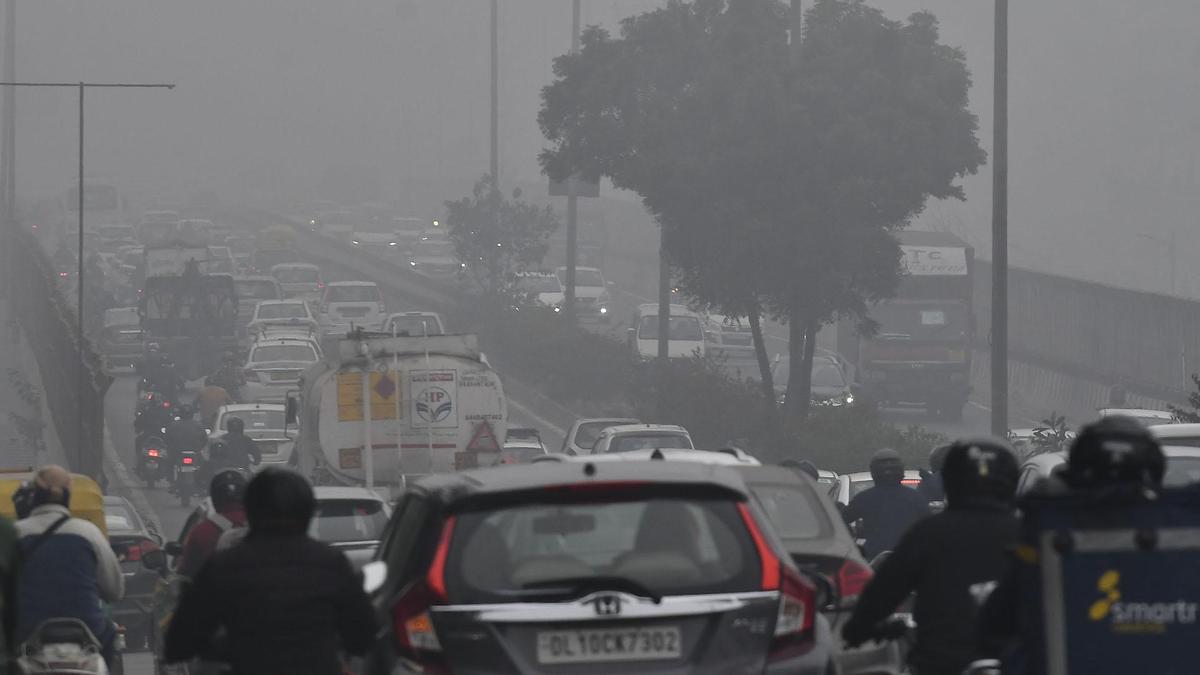
One of the suggestions made at the event, Mr. Yadav said was to make all public transport free or affordable to all passengers. “The biggest cause of air pollution is vehicular fumes. Vehicles contribute 51-53% of the local PM2.5 pollution in Delhi during winter. These figures clearly show that Delhi’s air pollution is now mainly local,” Mr. Yadav said. He added that in a city like Delhi, where pollution, traffic jams and social inequalities are interlinked, free or affordable public transport is not just a welfare scheme, but an imperative need for public health and climate protection.
According to the CPCB, an AQI between 0 and 50 is considered ‘good’, 51 to 100 ‘satisfactory’, 101 to 200 ‘moderate’, 201 to 300 ‘poor’, 301 to 400 ‘very poor’, and 401 to 500 ‘severe’.
The Commission for Air Quality Management in NCR and Adjoining Areas (CAQM) earlier this month constituted a 15-member committee, consisting of academicians, health care professionals and automotive research institutes, to control air pollution caused by vehicular emission. The Delhi government is also working on an EV policy to make electric vehicle the first choice among citizens after identifying vehicular emissions as the chief polluter, with the impact of stubble burning going down over the years. The Delhi government has also formed an expert committee to provide provide independent ideas, suggestions and solutions to tackle the capital’s chronic air quality crisis.
Published – December 30, 2025 01:59 am IST