
NEWS INDEX:
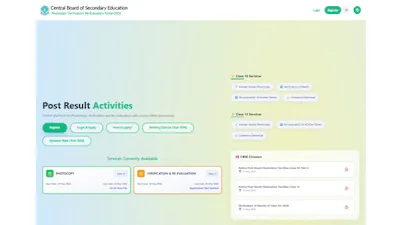
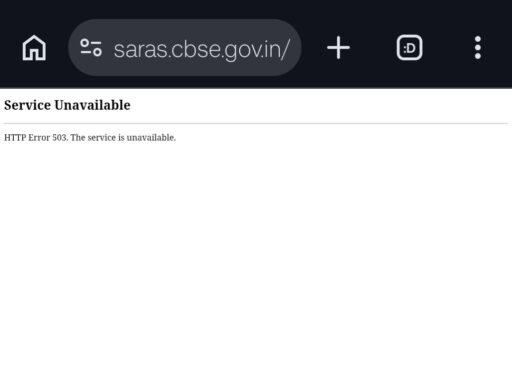
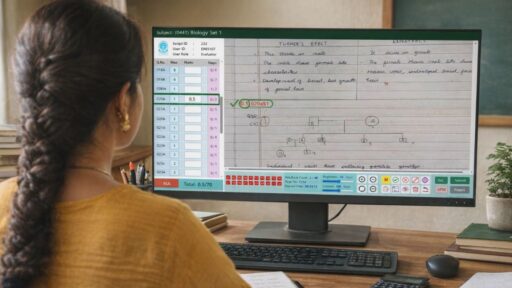
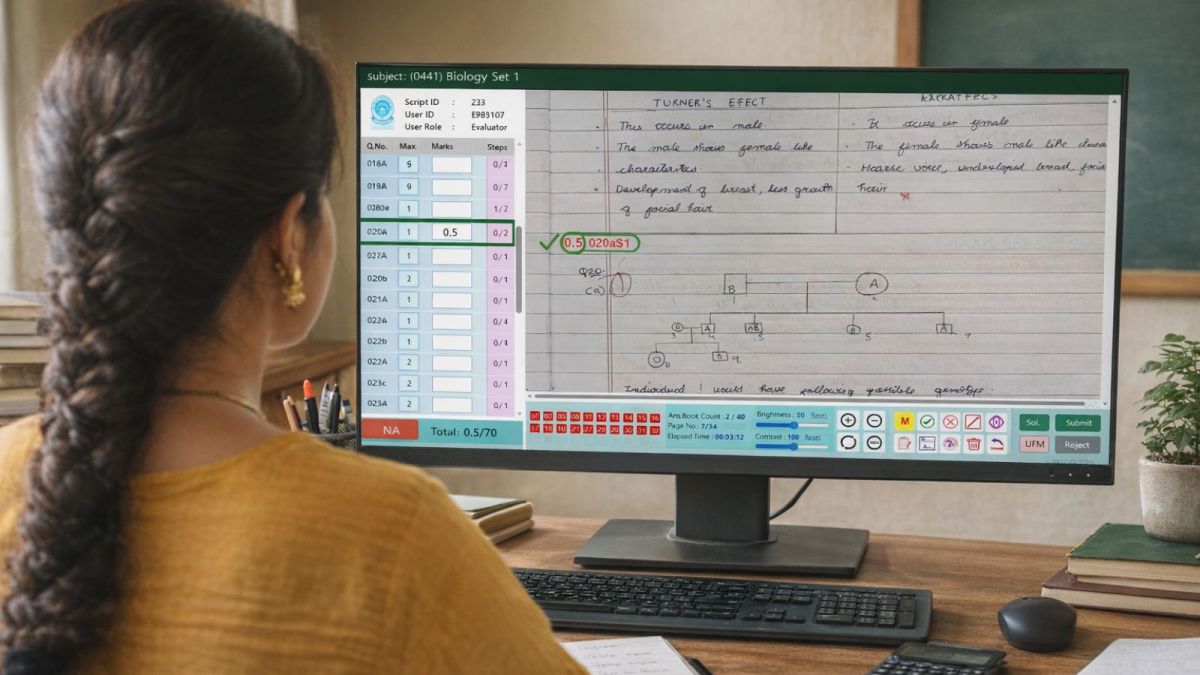
- SYSTEM UNDER PRESSURE: Reports of significant server outages and “awful” load times plague the debut of CBSE’s On-Screen Marking (OSM).
- EVALUATOR DISSATISFACTION: Teachers highlight “systemic lags” in paper downloads, with some checking only 4–5 scripts per day initially.
- OFFICIAL DENIAL: CBSE leadership maintains the system is “smooth and transparent,” despite conflicting ground reports from digital hubs.
- THE 2027 VISION: Board expected to optimize database resource allocation for the upcoming “Two-Part” exam structure in the 2026-27 session.
SPECIAL REPORT: TECHNICAL HURDLES SHADOW CBSE’S DIGITAL LEAP
NEW DELHI — While the Central Board of Secondary Education (CBSE) has hailed the 2026 On-Screen Marking (OSM) system as a revolutionary step toward error-free results, the ground reality at evaluation centers suggests a rocky start. Sources close to the process indicate that the highly advanced system has been hampered by infrastructure bottlenecks, leading to a “lingering” evaluation period that has tested the patience of the nation’s educators.
1. The “Server Slump”: Performance vs. Potential
Despite the “user-friendly” intent of the digital transition, evaluators have expressed deep disappointment with the backend performance.
- The Bottleneck: Reports suggest that poor server maintenance and inadequate database resource allocations led to massive delays during peak hours.
- The “Lag” Factor: Teachers reported “awfully slow” page load times and stalled paper downloads, forcing many to sit idle while the digital infrastructure caught up with the marking load.
- Evaluation Speed: In the first week of checking, some evaluators were restricted to a fraction of their usual capacity due to these technical disruptions.
2. A “First-Time” Acceptance
The consensus among IT administrators and school heads is that while the system is “one of a kind” and technically superior in its logic, it lacked the scalability required for 18 lakh students.
“As a first-time implementation, some glitches were acceptable,” noted one evaluator. “However, the frequency of server downtime suggests that the cloud infrastructure was not fully optimized for the concurrent load of thousands of teachers across India and abroad.”
3. Looking Ahead: The 2026-2027 Two-Part Reform
The 2026 experience is being viewed as an expensive but necessary “beta test.” CBSE is expected to learn from these resource allocation errors as it prepares for the 2026-2027 academic session, which is slated to move toward a Two-Board Examination policy (aligned with NEP 2020).
- Full Digital Rollout: It is anticipated that both SSE (10th) and SSCE (12th) will move entirely to the OSM system for both terms.
- Infrastructure Upgrades: Future requirements will likely demand even more robust digital infrastructure from schools, including higher bandwidth and improved localized caching to bypass central server congestion.
4. Impact on Results
The delay caused by these technical “lingering” periods has pushed the result expectation toward late May. While the system eliminates manual totaling errors, the time lost to “loading circles” has offset the speed gains initially promised by the Board.
VERIFICATION SUMMARY
- Event Log: Documented complaints from evaluators in Delhi and Uttarakhand regarding blurred scripts and slow connectivity (May 8-9, 2026).
- Official Status: CBSE Controller Sanyam Bhardwaj’s statement (April 29, 2026) officially denying “glitches” while confirming the third-week-of-May result timeline.
- Technical Analysis: Confirmed rollout of the Two Board Examination Policy notified on June 25, 2025, to be fully implemented in the next cycle.
- Data Point: Over 10 crore answer books estimated for digital assessment in the current 2026 cycle.