

Miss Indian World pageant winners mark the end of a decades-long tradition
That was in 1984, when High Elk remembers letting her six older siblings do most of the talking and wanting no part in a competition that required public speaking. But the event that transformed her from shy teen to an ambassador for her people has come to an end.
“From the day I got my crown, my life changed,” said High Elk, who credits her time as Miss Indian World with giving her the confidence to pursue two degrees and a career expanding credit access for Lakota people. “I want that same opportunity for my granddaughters.”
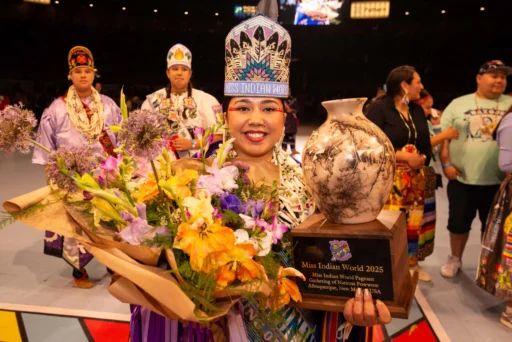
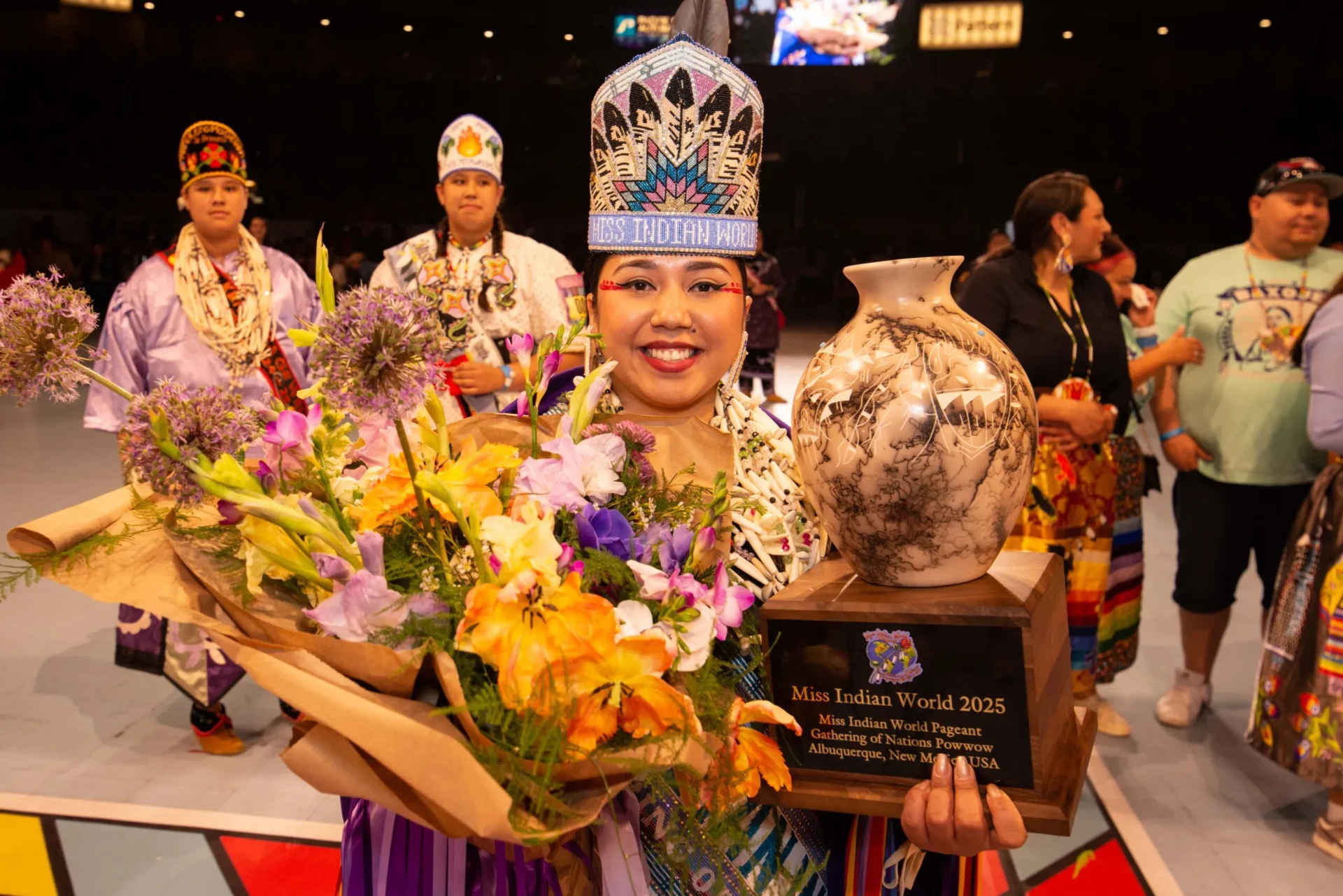
The pageant has been a headlining event at Gathering of Nations, a massive and at times controversial event that bills itself as the largest powwow in North America, for more than four decades. The competition shaped the lives of young women from across the U.S. and Canada eager to share cultural knowledge and compete for the prestigious title and iconic, intricately beaded crown.
But this year will be the last for the powwow, with the final Miss Indian World named in 2025. Organizers have said the time has come for the events to end, but gave no other details.
The pageant’s rotating collection of beaded crowns are set to be retired when the two-day gathering culminates Saturday. In time they may be offered to a museum for display, said Melonie Matthews, daughter of the Gathering of Nations founder.
Dania Wahwasuck, of the Prairie Band Potawatomi and Pyramid Lake Paiute tribes, won her title before a roaring crowd last year. Her pastel-colored crown and sash featuring a star quilt motif and another set that sparkles with rhinestones and shades of pink will be among those retired Saturday.
The pageant invited Indigenous women, aged 18 to 25, to compete. Contestants had to be single, with no children and pledge to maintain specific moral standards.
Contestants described an intense five-day process with interviews, public speaking and a highly anticipated traditional talent showcase.
Tori McConnell, who won the title in 2023, sought advice from Karuk and Yurok elders while developing her performance. She showcased traditional basketry, explaining first in Karuk and then in English how she weaved using materials gathered from her ancestral homelands in northwest California.
“To have our art recognized on that level was so validating,” McConnell said. “Not just for me but for my community.”
The Miss Indian World crown has traveled around the world, from a Māori Haka competition in New Zealand to the Peace Memorial Park in Hiroshima, Japan and the Oceti Sakowin camp at the height of protests at Standing Rock against an oil pipeline.
In the summer of 1984, High Elk recalls scouring a Paris grocery store for ingredients to make fry bread and Lakota tripe soup for the university students who had invited her there.
“You become an ambassador not just for your own culture but for all Indigenous peoples,” said Shayai Lucero, who was crowned Miss Indian World in 1997.
Lucero, who comes from Acoma and Laguna pueblos in New Mexico, did not grow up in a powwow culture. But at the 1997 Stanford University Powwow, she was embraced by a community of pueblo people who had been in the Bay Area for decades due to a federal program that sought to relocate Native Americans off reservations and into cities.
“All these people showed up who knew my family, knew our language and traditions,” said Lucero. “Suddenly, I felt at home.”
During their tenure, winners have advocated for causes ranging from Indigenous language revitalization to domestic violence prevention.
Cheyenne Kippenberger, Miss Indian World 2019, focused on mental health as COVID-19 forced ceremonies, cultural events and community gatherings to shut down. As the only two-year titleholder, she hosted online events and encouraged Native people to get vaccinated.
“I remember thinking, everybody’s feeling really lonely and confined. We need to find a way to connect people,” said Kippenberger, a citizen of the Seminole Nation of Florida.
There are no plans for the Miss Indian World pageant to continue, the organization said. The title is trademarked by the Gathering of Nations, Ltd., the nonprofit that operates the powwow and pageant.
Over the years, Gathering of Nations has been criticized and called overly commercial. Founder Derek Mathews, who at times has claimed distant Cherokee ancestry but is not a tribal citizen, has made few public comments in response.
Melonie Matthews, who is Santa Clara Pueblo on her mother’s side, said the organization did not consider transferring the Miss Indian World trademark to any other group.
“The Miss Indian World pageant goes hand in hand with the powwow. It was never a stand-alone event,” she said in an emailed statement.
Several former titleholders, however, have been exploring the creation of a new national pageant for Indigenous women.
“A lot of us were saying ‘Miss Indian World is bigger than one powwow,’” Lucero said. “We don’t need the powwow to continue her legacy.”
Many tribal nations and powwows crown royalty. But young women who dream of representing their communities on a national, Native-focused pageant stage won’t have that avenue. Five years ago, Miss Native American USA crowned its last winner. The Miss Indian Nations and Miss Indian America titles also are defunct.
Many past Miss Indian World titleholders who went on to become lawyers, teachers, entrepreneurs, language and culture bearers and sisters to one another say the crown empowered them as leaders.
“It’s a bittersweet feeling,” said Kippenberger, who now heads a tribal consulting firm. “But I feel full confidence and optimism that something positive will fill in the gap.”
This article was generated from an automated news agency feed without modifications to text.


