


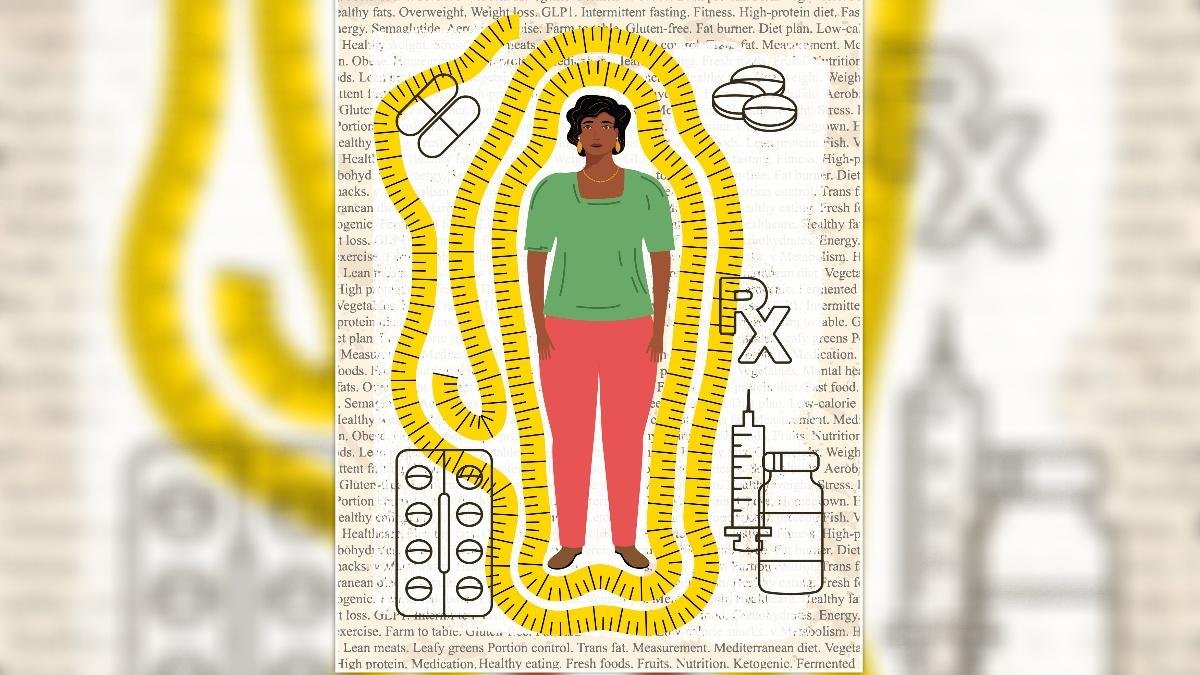
A single mother who has been battling obesity for a large part of her life, she decided it was time for a transformation when during a Scotland vacation with her toddler son in 2024, she was left gasping after a steep climb. Dhond was a pre-diabetic then. “He would run up the hills and I would be far behind. I realised it was time to change things,” she recalls. From weighing 117 kg in March 2025, when she started her GLP-1 journey with Ozempic, Dhond is at 95 kg today. She points to a feeling of reinvention and liberation — a “game-changer”, in her words.
By 2029, there will be around 40 million global users of the GLP-1 drug, forecasts a UBS Investment Bank report. Dhond’s journey is similar to that of millions around the world for whom obesity has cumulatively chipped at metabolic parameters such as insulin resistance, and body image-related self-esteem. Dhond is the ideal GLP-1 user, according to standards set by Dr. Alexandra Sowa, a New York-based internal medicine and obesity expert, in her book The Ozempic Revolution (2025), one of the first comprehensive, experience-based guides to a fulfilling GLP-1 journey: “You need to know how to thrive. How to eat, think, live and most importantly, how to change your relationship with food,” she writes.
Mukta Dhond at her residence in Khar, Mumbai. | Photo Credit: Emmanual Yogini
Dhond’s fitness routine includes swimming, strength training thrice a week, a short walk after every meal, monthly blood work, and bi-monthly follow-ups with her endocrinologist. She spends up to ₹20,000 a month. GLP-1 drugs (injections) cost ₹8,000-₹10,000 depending on the dose. The generics, now available in pharmacies with a prescription, will cost ₹3,500-₹4,500. “They are expensive,” says Dr. V. Mohan, Chennai-based diabetologist and Madras Diabetes Research Foundation chairman. “Even after the price reduction because of the introduction of generics, they are beyond the reach of the common man.”
The magic pill, a new promise
After six months, when Dhond’s doctor changed the prescription to Mounjaro, her weight loss journey accelerated. Her Body Mass Index when she started her GLP-1 journey was 45 (the normal range is up to 23). Chronic pains vanished and several blood parameters became normal, but her thyroid levels dropped to zero, and “the muscle loss and sagging were unreal”. With sustained fitness and diet protocols — a non-vegetarian diet of lean proteins, high quality fats such as olive oil and avocado, and minimal carbohydrate — her thyroid levels and muscle health improved.
GLP-1s can lead to excessive muscle loss and amplify an already existing protein deficiency crisis in Indian diets across States and communities; doctors prescribing GLP-1s recommend a diet of small meals through the day, each meal containing specific portions of protein — vegetarian or non-vegetarian — according to personal needs.
Bollywood filmmaker Hansal Mehta has lost 32 kg. | Photo Credit: Special Arrangement
A journey similar to Dhond’s is that of Bollywood filmmaker Hansal Mehta. Mehta weighed 105 kg three years ago. Different diets and exercise regimes failed. After being on Mounjaro for the past eight months, and supplementing it with strength training and cardio workouts four times a week, intermittent fasting on most days for 16-18 hours, and an array of supplements, Mehta is now at 73 kg. “My actual age is 57, but based on all health parameters, my metabolic age is 43,” he says. His blood pressure levels, which remained high for two decades, have stabilised. “At parties, my weight-loss journey often gets dismissed as ‘Oh, he is on Mounjaro’. But the reality is I am doing so much more than just the pill,” Mehta says.
Without lifestyle modification protocols, it can be a disappointing experience. A 33-year-old Bengaluru-based finance professional, speaking on condition of anonymity, says, “Both my wife and I were on Mounjaro, I was at 110 kg. Our doctor did not mention specific diet or exercise protocols. Our eating went down drastically and, in the process, we lost around 10 kg over four months. But I was always low on energy and mood, and had nausea all the time. Mounjaro definitely doesn’t live up to its hype,” he says. He adds his wife gained back 4 kg soon after they stopped the drug.
Among the few Indian diabetologists to use social media to explain realistically what these drugs can do, Dr. Mohan often fields questions from prospective users about its duration and side-effects. “One has to be prepared to take it for years, maybe even life-long, I tell them. Side-effects like nausea and digestive disorders usually resolve themselves, and those like pancreatitis, thyroid cancer and blindness are very uncommon. But GLP-1s are still not the solution for diabetes and obesity crises in our country.”
Appetite has a new name: food noise
How exactly does a Glucagon-like-Peptides-1 (GLP-1) receptor agonist work? Approved for weight loss besides type-2 diabetes in 2021 in the U.S., GLP-1 is a natural metabolic hormone produced in the gut that regulates blood sugar by stimulating insulin release, reducing glucagon secretion and increasing feelings of satiety or a feeling of fullness. The GLP-1 receptor agonists mimic this hormone for managing type-2 diabetes and obesity.
Appetite has a new name in the Ozempic-boosted world: food noise. And the hyped magic of these drugs rests on this one property — cutting out food noise, or mental chatter about hunger/eating, in an obese or/and diabetic person completely. Food noise in India can be punishment. You may hear it, but you can’t give in to it simply because you have no access to proper nutrition or enough food. We have parallel epidemics of malnutrition/ undernourishment and obesity — around 172 million Indians are undernourished, according to the 2025 State of Food Security and Nutrition in the World (SOFI), and the National Family Health Survey-5 (NFHS-5, 2019-21) data shows that approximately 24% women and 23% men in India are either overweight or obese.
Also Read | India’s burden of malnutrition and obesity: where diet makes or breaks
We are in the thick of this GLP-1 revolution, and doctors in India, the diabetes capital of the world — where an obesity epidemic is swelling across its 1.47 billion population — are cautiously optimistic. Dr. David Chandy, director, endocrinology and diabetology, Sir H.N. Reliance Foundation Hospital, Mumbai, explains the euphoria: “Newer agents in this family, and dual incretin drugs such as tirzepatide, have changed the conversation because, for the first time, we have medicines that can produce meaningful and, sometimes, dramatic weight reduction. American Diabetes Association guidelines now place weight management centrally in diabetes care, and GLP-1-based therapy is among the preferred approaches when weight loss is a major goal.”
Patent expiry triggers generics boom
India is just a year into GLP-1 prescriptions, and no structured data on usage is available yet, but pharmaceutical company representatives informally estimate the Indian market at around ₹100 crore. In March this year, the Dutch pharmaceutical giant Novo Nordisk lost the patent for Semaglutide, the most used GLP-1 drug, for diabetes and weight loss. India leads in the number of generics that were announced in the wake of this patent expiry.
Several brands are incoming, which includes Sun Pharmaceutical’s Sematrinity and Noveltreat (priced between ₹2,690 and ₹7,490, depending on dose). “We are working closely with government institutes and trying to make the generics available widely,” says a Sun Pharmaceutical spokesperson. Last week, Novo Nordisk reportedly slashed prices of both Ozempic and Wegovy by 36% and 48%, respectively, in India — giving the generics more competition in the rapidly widening market.
Indian culture: Singular & complex
When it comes to food culture and metabolism, India has a singular signature. Food is community, tradition and lineage, and GLP-1s generally make a user largely food-proof. As Dhond says, her life has changed inside out. “I was a party girl; a more-than-two-tequilas person. Now, socialising for me is more fitness-related activities or talking and connecting more than eating or drinking.” Adds Mehta, “That one glass of wine is a rarity now.”
In a biological sense too, there’s a singularity in India’s diabetes-obesity continuum, and most doctors say GLP-1 drugs are unlikely to crack this complexity. Unlike in many countries around the world, obesity in India is not a strictly metabolic crisis. Our overweight bodies are often a function of genetic mechanisms and foetal undernourishment, besides growing processed diets and resistance to exercise.
Dr. Ravi Sankar Erukulapati, senior consultant endocrinologist, Apollo Hospitals, Jubilee Hills, Hyderabad, points to our “sarcopenic obesity” — low muscle mass and higher fat mass, which worsens insulin resistance. “Added to this is a general lack of awareness. Many people still equate absence of visible obesity with good health, which is not true in the Indian context,” says Dr. Erukulapati.
Dr. Dheeraj Kapoor, head, endocrinology, Kokilaben Dhirubhai Ambani Hospital, Mumbai, adds, “These drugs are not a quick-fix at a population level. Access, cost and appropriate use will determine impact. Even in the best-case scenario, it will take years before we see a meaningful shift in overall numbers.”
Science behind ‘thin-fat Indian’
Sarcopenic obesity is endemic in Indian populations — thin arms and forearms, thin legs, narrow chest, but a soft round bulge in the middle; that’s a common body type among 40-plus Indians. This body profile doesn’t have proven targeted solutions. On the contrary, GLP-1s alchemise one thing in the body exceedingly fast: the shrivelling of muscle mass. Dhond, based on her experience as a Mounjaro user, calls it “death by muscle loss” — the key factor that made her gravitate to a comprehensive lifestyle and exercise protocol.
One Indian diabetologist has been devoted to finding a solution to this problem for more than 30 years. Dr. Chittaranjan Yajnik coined the term ‘thin-fat Indian’ in the early 2000s. In the 1980s, when Dr. Yajnik, weighing 55 kg, was studying at Oxford University, he discovered as part of a research project that his glucose-insulin metabolism was worse than that of his 80 kg English colleague. “I was thin, but had the metabolism of an overweight person,” recalls Dr. Yajnik, 74, director of diabetes unit, KEM Hospital, Pune. “Indians deposit most fat in and around the abdomen. The highest glucose levels are in those who have low BMI but high waist measurement,” he adds.
The reasons, as Dr. Yajnik found out later, are genetic as well as epigenetic. Exposure to a challenging environment in the womb increases the risk of future diabetes, obesity and heart disease. In India especially, “the heritability of obesity is estimated at 40%-70%. The genetics part influences behaviour around food, such as hunger, satiety, and food reward,” says Dr. Ramesh Hariharan, CEO and co-founder, Strand Life Sciences, Bengaluru, India’s leading genomic testing company.
“Genetics loads the gun, lifestyle pulls the trigger,” adds Dr. Hariharan. According to him, the obesity-related genes cannot be modified — at least not for a long time to come — and lifestyle remains the best “reprogramming tool” for obesity.
Backlash and a fuzzy future
Murmurs of a backlash against the escalated approval of GLP-1s in India went beyond social media, to the Indian judiciary in 2025 — long predating the Indian government’s official guidelines for the usage of these drugs, which came out in the first week of April. The guidelines specify that to be on any GLP-1 drug, generic or the originals, a prescription from an endocrinologist, a cardiologist or an internal medicine specialist is essential. It also instructs drug manufacturers to stop any marketing that encourages unsupervised use.
Jitendra Chouksey, fitness evangelist and founder of preventive health company FITTR, Pune. | Photo Credit: Special Arrangement
The biggest opposition was in the form of a PIL, submitted to the Delhi High Court in May 2025 by Jitendra Chouksey, fitness evangelist and founder at Pune-based preventive health company FITTR. “I felt it was needed because of the fast approvals these drugs got, and the way it is being used not just in hospitals, but in wellness clinics. I had many clients who were on it. The muscle mass loss it causes can be dangerous and as soon as you stop the medicine, the weight comes back with a vengeance,” says Chouksey, 40.
GLP-1s enter bridal packages
It’s unclear what weight-loss drugs will ultimately do to human metabolism and the human body. As a market, it is gold rush now, trickling down even to aesthetic clinics. At Klarity Health Clinic in Delhi, for example, a Mounjaro Bride Package comes at ₹1.10 lakh for 12 sessions. India’s GLP-1 brides are a swelling demographic.
Every other day, there is news from the U.S. about the effect of GLP-1s beyond weight and metabolism — to addictions, menopausal health, autoimmune diseases, and even mental health. In the Indian context, given our diversity and unique obesity signature, the promise is lofty but conditional, at best. Time will tell if Ozempic really changes humanity’s attempt at optimum health in an overburdened planet.
The writer is a Mumbai-based journalist and health advocate, and behind the preventive health and longevity media IP @the_slow_fix.