

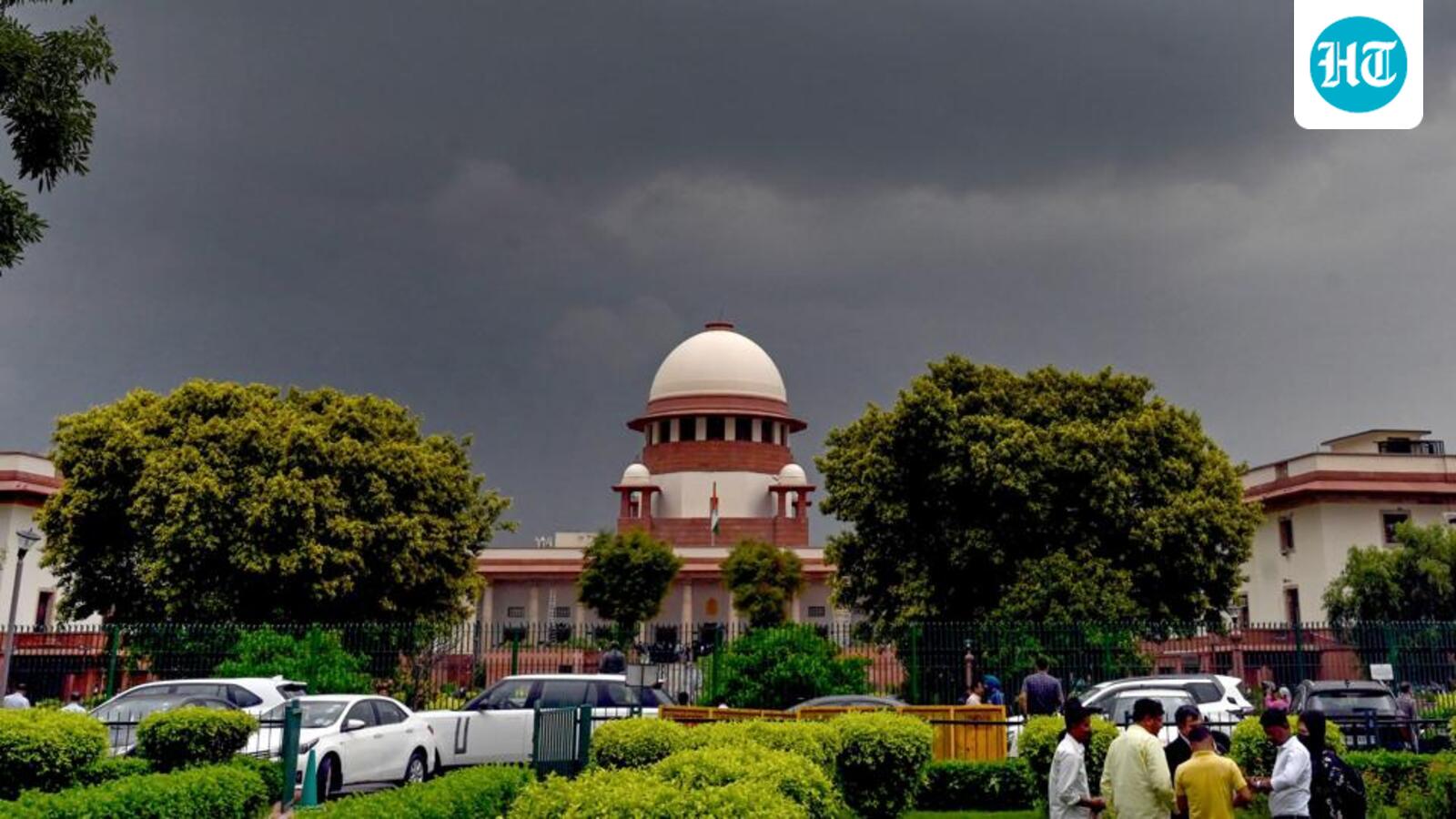
The Cabinet decision proposes to raise the strength of the Supreme Court (HT File Photo/Arvind Yadav)
The decision, taken at a meeting chaired by Prime Minister Narendra Modi, paves the way for introducing the Supreme Court (Number of Judges) Amendment Bill, 2026, in Parliament. The proposed legislation seeks to amend the Supreme Court (Number of Judges) Act, 1956, to expand the court’s capacity at a time when over 92,000 cases are pending.
An official statement said the increase was intended to strengthen the apex court and enable the speedier disposal of cases, noting that more than 92,000 cases were currently pending before it. “The number of increase shall help speedier justice,” the government said.
The move comes more than six years after the last revision in 2019, when Parliament raised the strength to 33 judges from 30. At the time, there were over 58,000 cases pending in the top court
The Constitution itself does not fix the number of judges in the Supreme Court. Article 124(1) of the Constitution provides for a Chief Justice of India and leaves it to Parliament to determine, through legislation, the number of puisne judges. This flexibility has allowed successive governments to periodically revise the court’s strength in response to rising caseloads.
The Supreme Court of India officially began on January 28, 1950, with a sanctioned strength of eight judges — one CJI and seven puisne judges. This structure was set by the 1950 Constitution, and in its early years, all eight judges sat together to hear cases.
Later, it worked with a modest sanctioned strength of 10 judges (excluding the CJI) under the 1956 Act. This was first increased to 13 in 1960 and then to 17 in 1977. However, the effective strength remained capped at 15 judges until 1979, when the restriction was lifted following a request from the then CJI.
Subsequent decades saw further expansions. The sanctioned strength was increased to 25 in 1986 and later to 30 in 2008. The most recent revision prior to the present proposal came in 2019, reflecting a continued effort to align judicial capacity with the growing docket.
The proposed increase to 37 judges, apart from the CJI, marks the latest attempt to bridge that gap, as the court continues to grapple with a steadily rising caseload.
To be sure, Supreme Court judges now sit on benches of two or three members for regular cases, and convene on larger constitution benches of five or more to resolve conflicts between prior bench decisions or to interpret substantial constitutional questions.