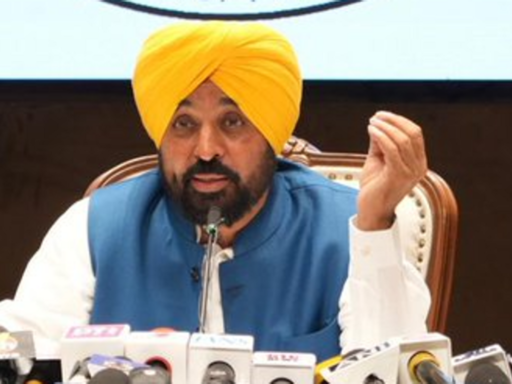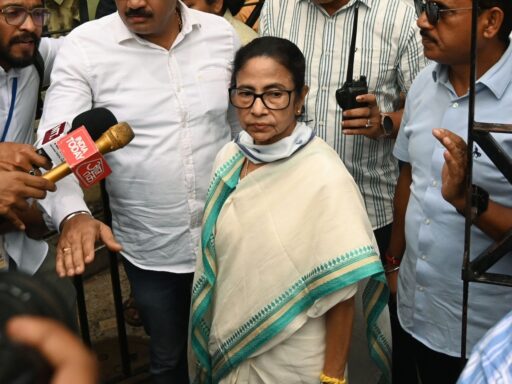



MK Stalin is contesting from Kolathur as he hopes to return to power. (HT File Photo)
Matrize projects the ruling coalition winning 122–132 of the 234 seats with 40.3 per cent of the vote, while People’s Pulse is more bullish, putting the DMK alliance at 125–145 seats.
Both agencies agree the DMK crosses the majority mark of 118 with room to spare.
The AIADMK-led front is projected to bag 87–100 seats per Matrize and a significantly lower 65–80 as per People’s Pulse.
Actor Vijay’s debutant Tamilaga Vettri Kazhagam (TVK) is expected to open its account with 10–12 seats according to Matrize, while Peoples Pulse gives it a stronger debut at 18–24 seats.
If the projections hold, Chief Minister MK Stalin would become only the second DMK leader after his father M Karunanidhi to win back-to-back terms in office.
The election was held on April 23 across the state in a single phase, and recorded a historic voter turnout of 84.69 per cent, the highest ever in a Tamil Nadu assembly election.
What exit polls said in 2021, how accurate were they?
Exit polls in the last assembly election had strongly indicated a sweeping victory for the DMK.
Despite frequent criticism, exit polls in 2021 broadly got the direction right. Most surveys predicted a landslide for the DMK-led alliance, projecting between 160 and 190 seats — well above the 118 needed for a majority.
In 2021, India Today-Axis My India projected 175–195 seats for DMK and 38–54 for AIADMK, with vote shares at 48 per cent and 35 per cent respectively. Republic-CNX predicted 160–170 seats for DMK and 58–68 for AIADMK. Today’s Chanakya estimated 175 seats for DMK, with an error margin of 11, and 57 seats for AIADMK. ABP-CVoter gave 160–172 seats to DMK and 58–70 to AIADMK.
The 2021 final results saw DMK winning 133 seats, while AIADMK secured 66. Congress, as part of DMK’s alliance, got 18 seats, with an overall voter vote turnout of 76.6 per cent.
Most agencies over-projected the DMK’s seat tally but got the direction and the margin of victory broadly right.
Keen contest
Over 5.7 crore voters were eligible to cast their ballots, spread across more than 75,000 polling stations at over 33,000 locations. The surge in participation was more than 11 percentage points higher than 2021.
The battle was primarily framed as a head-to-head between Stalin, who campaigned on his government’s welfare schemes and Dravidian governance model, and AIADMK’s Edappadi K Palaniswami, backed by the Centre’s ruling BJP as part of the NDA, who made anti-incumbency and price rise the central planks of his campaign.
Key contests are expected in Kolathur, Edappadi, Coimbatore, South Chennai, and parts of western Tamil Nadu, where margins could shape the overall outcome. Both alliances had expressed confidence going into polling day, making the exit poll numbers all the more consequential.
The wildcard in this election was Vijay’s TVK.
By fielding candidates in all constituencies, the party planted itself firmly as a third option, distancing itself ideologically from the NDA while simultaneously taking on the DMK, making a direct pitch for voters disillusioned with both established Dravidian parties.
The divergence between Matrize’s 10–12 and Peoples Pulse’s 18–24 for TVK may well be among the most closely watched numbers on counting day.
Altogether, 4,023 candidates contested across the 234 constituencies.
The official counting of votes is scheduled for May 4, when Tamil Nadu will know for certain whether the exit poll projections bear out, and whether Stalin gets to follow further into his father’s footsteps.