
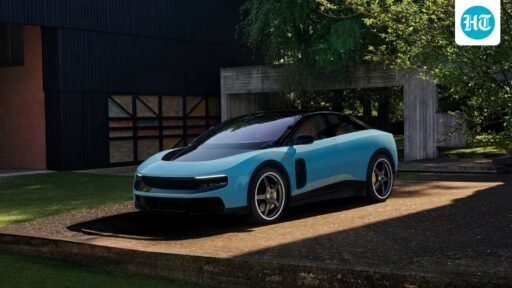
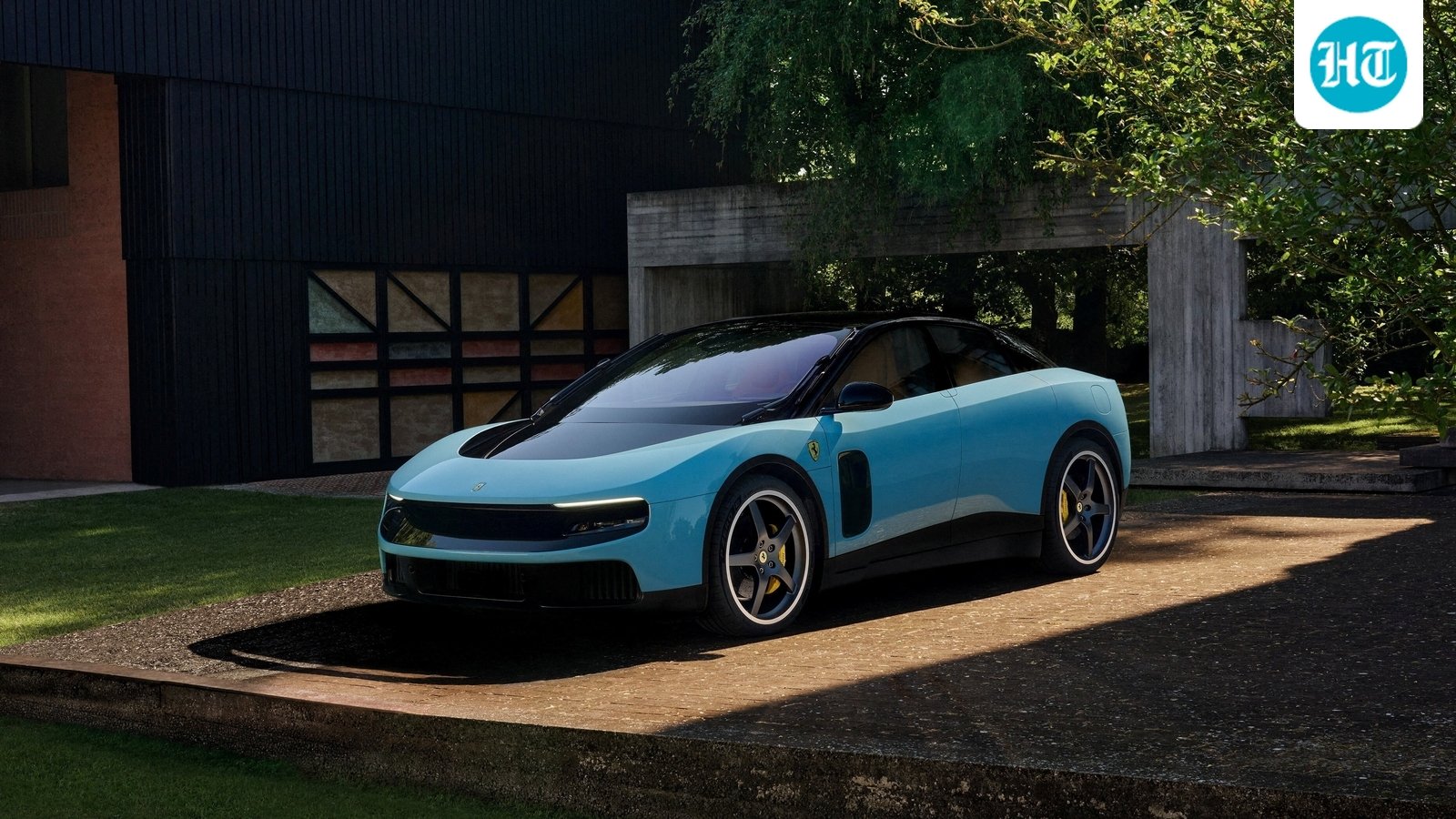
Ferrari’s first fully electric car “Luce” in this handout image obtained by Reuters May 25, 2026, after the luxury sports car maker unveiled the model. (Via Reuters)
Some features of the Luce are typical of the Italian marque. Four electric motors deliver over 1,000 horsepower, blistering acceleration and a top speed of 193mph for around €550,000 ($640,000). That makes the Luce the priciest of the brand’s higher-volume models, though exclusive limited-edition hypercars can run to over €3.6m. Despite weighty batteries, its engineers will have ensured that it handles as smoothly as any other Ferrari.
But in other respects it is a radical departure, with five seats (a first for the marque), four doors and more boot space than the Purosangue, another four-door model launched in 2022. That model—which Ferrari refuses to concede is an suv, despite the evidence—was also a controversial departure from Ferrari tradition, but a resounding commercial success.
Ferrari will hope that the Luce meets with the same success as Rolls-Royce’s Spectre, another pricey EV from another firm that is closer to a luxury-goods enterprise than a carmaker. Elsewhere, however, demand for electric supercars has been lacklustre. Lamborghini, an Italian rival, dropped its plans for a battery-powered vehicle, citing lack of interest among its customers. Even Ferrari has scaled back its electrification target to 20% of its line-up by 2030, down from an earlier goal of 40%.
Ferrari’s market capitalisation, at about €52bn, is on a par with Ford, which sold 4.4m vehicles last year, compared with 13,640 for Ferrari. Yet investors have lately begun to question whether its valuation has sped too far ahead. Its market capitalisation has fallen by around a third since October, after an investor day where projections of future growth disappointed (see chart).
Ferrari need not sell that many of its first EV to notch up a victory. Although the firm is tight-lipped about targets, it is likely that the Luce is the type of Ferrari that would sell at most 9,000 cars over a roughly four-year model cycle. It will probably turn a healthy profit selling fewer than that. More important will be establishing Ferrari in the ev business.
Ferrari’s strong ties to its loyal customers will help with that. Many of them own several cars adorned with the prancing horse logo, and may wish to add the first ev to their collections. Benedetto Vigna, Ferrari’s boss, has stressed that demonstrating brand loyalty, the usual route to eligibility for acquiring one of the firm’s coveted limited-run hypercars, does not apply to the Luce. But many of the faithful will not take the risk.
Then there is the prospect of luring new customers. Ferrari’s hope is that the Luce’s bold but unfussy design and tech-filled interior will appeal to a different audience from its usual clientele. Mr Vigna has said that his firm is pursuing the segment of the market that “want and will buy a Ferrari, if and only if it’s electric”.Around four-fifths of the firm’s sales currently go to existing customers. At the launch event for the Luce, however, around half the invited guests were reportedly new to the brand. Ferrari is attempting a risky manoeuvre. It might just pull it off.