

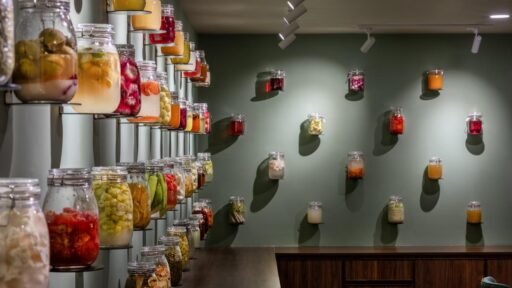
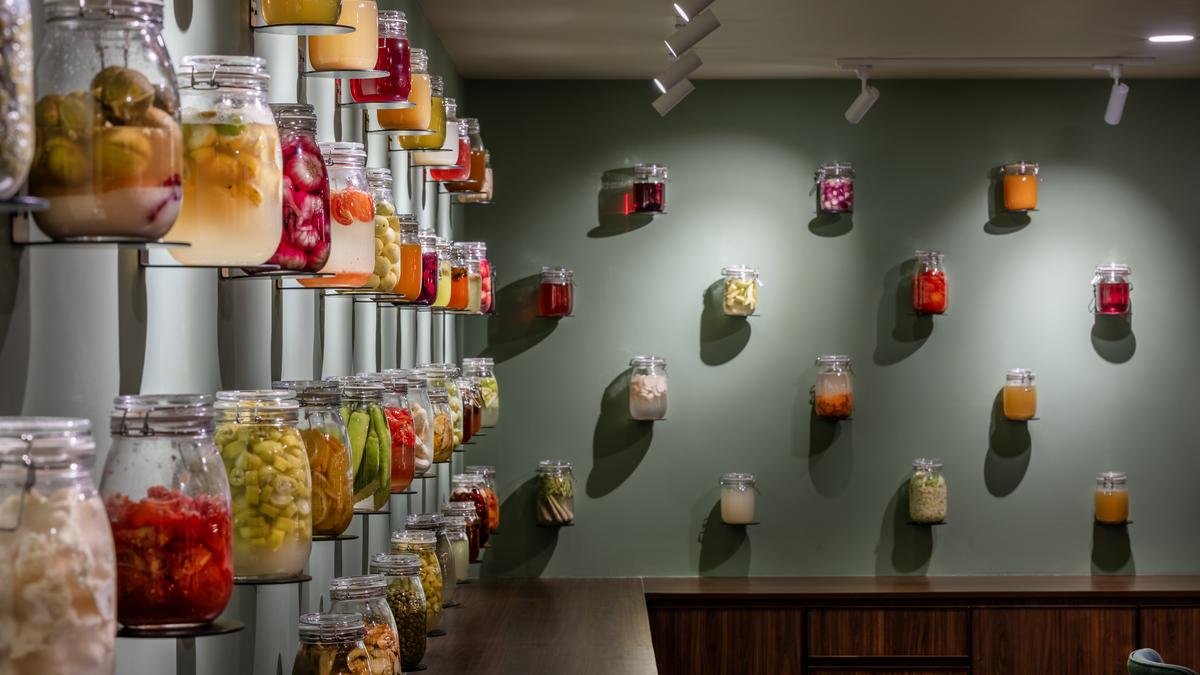
This shift is not just about sleeker tools at the bar console or the bartender’s theatrical presentation of your favourite drink, but also about the process of extracting the exact flavours out of the key ingredients used in the cocktail. It is time to pay close attention to the glass bottles lined along bar shelves — lemons, chillies, and fruits suspended mid-ferment. They’re not décor, but the new building blocks of flavour.
Though India is no stranger to fermentation, with dishes like idli, dosa, kanji, pickles, shikanji, this anaerobic biochemical process became a global phenomena with food trends that popularised sourdough, kimchi and kombucha. From lemons and tomatoes to chillies and beyond, fermentation is becoming central to modern bartending. India, of course, has always had this language; think idli, dosa, kanji, pickles, shikanji. But it took sourdough, kimchi and kombucha going global for us to recognise its craft value. Today fermentation underpins a new kind of cocktail-making, one that leans on house-made vinegars, lacto-fermented syrups, kombuchas and kefirs to build depth, texture and a certain “funk”.
Payal Shah in the ferment library by The Good Craft Co | Photo Credit: Special Arrangement
“Fermentation uses yeast or bacteria to create savoury, tangy flavours,” says Yangdup Lama, Delhi-based master mixologist. “India’s regional ingredients are so diverse — why rely on readymade mixers? Fermentation lets us create something unique, while also reducing waste.” Yangdup partnered with Desal Lama from Nepal for The Brook, a speakeasy bar in Nepal. He said, ”At The Brook, we focus on minimizing waste through fermentation by making a cocktail inspired by Tongba using fermented millet juice. Once the liquid is extracted, we repurpose the leftover millet into delicious laddus with ghee and sugar, ensuring that nothing goes to waste, just great drinks paired with a tasty bite.”
At Humpy in Karnataka, chef Alistar Lethorn is experimenting with fermented mustard leaves to bring a wasabi-like punch to cocktails, including a bamboo shoot tequila drink named after his hometown, Kohima. “Ferments are intense,” he says. “It takes multiple trials to balance flavour and aroma, but that’s what makes it exciting.” And to get it all right they use processes like of fat wash etc.
Prachet with some prized ferments | Photo Credit: Special Arrangement
The momentum is catching on. At the India Bartender Show, which was held in February this year, young mixologists were urged to move beyond ready-made mixers. Prachet Sancheti of Brown Koji Boy, touted as India’s first dedicated koji fermentary based in Goa, conducted umami in a glass session, however, cautions against chasing a trend without understanding it, or the customer. “That funk isn’t for everyone. Balance is key — think 70–30, not a complete switch,” he says. A few of his top drinks are Miso Banana Caramel, Shio Koji Highball, Count Caramel, featuring black soyabean miso, bacon fat-washed old fashion featuring cashew black garlic miso, Miso Martini featuring Koji hot sauce and so on.
For those curious, The Good Craft Co., (a flavour lab experience home by Diageo in Bengaluru), offers a hands-on way in. Through guided tastings and fermentation workshops led by Payal Shah, fermentation expert, guests explore flavour-building up close — sampling from over 70 live ferments in various stages of experimentation.
Payal keeps it simple. “For drinks, a total no-brainer is a citrus cheong — nimbu, orange, grapefruit, anything citrus,” she says. “Mix equal parts fruit and sugar, pack it into a jar and leave it for three to four days. What you get is an incredible syrup — it captures the zest, oils, a hint of bitterness from the pith, sweetness from the sugar and the acidity of the juice.” It works just as well topped with soda as it does in a more complex cocktail.
Chana dal koji by Sanchet | Photo Credit: Special Arrangement
For her, cheong, a traditional Korean syrup made by mixing fruits, roots, or flowers with an equal weight of sugar (1:1 ratio) to extract juices and create a concentrated, fermented sweet syrup, is a must-have, at home or behind the bar — a ferment that adds instant depth. On the savoury side, she recommends lacto-fermented fruit (peaches, plums or berries), created by submerging fruit in a 2% salt brine (or dry-salting) to encourage lactobacillus bacteria to convert natural sugars into lactic acid. “It’s something our grandmothers have always done, but applying it to fruit creates a beautiful accent. You’re not building the whole dish around it, just adding bursts of flavour. Even a simple salad with a few lacto-fermented grapes or berries can transform it. Slightly sweet, tart and salty, it lifts everything else on the plate.”
Not everyone is convinced. Independent bar consultant Karl Fernandez calls fermentation time-consuming and exacting. “It’s a natural process and requires careful tracking,” he says. While he enjoys fermented drinks, he is hesitant to build an entire bar programme around them. “Not everyone in India is familiar with those flavours.”
What do I pair my cocktail with ferment I asked Prachet? “Think of fermented drinks not as accompaniments, but as flavour bridges—use their acidity to cut fat, their funk to echo umami, and their subtle sweetness to round heat, so every pairing feels like a continuation of the dish, not a contrast,” he suggested.
How are bars making use
Rehan Guha, founder of Oxymorons, a speakeasy in Hyderabad, sees fermentation as a way to build depth that fresh ingredients alone cannot achieve. “The ‘Welcome Drink,’ reflects this,” he says. “We use pineapple skins and strawberries to create a tepache-style ferment — bright, lightly effervescent, with a subtle funk and layered fruitiness. It feels far more evolved than a straightforward juice or soda, and aligns with our low-waste approach, where discarded ingredients become something refreshing.”
With the welcome drink finding favour, the team at Oxymoron is pushing further. They are experimenting with seasonal fermented fruit sodas — think guava, jamun or kokum — for naturally sparkling, low-ABV options.
With so much happening at bars with ferments, summer is the best time to make an excuse and be at your favourite cocktail bar more than usual, tasting newer cocktails with their in-house ferments. Consider it a learning process.