
“It is far more challenging to get audiences into theatres today,” she says during an interview at Jubilee Hills in Hyderabad.
The challenge, she explains, lies in persuading viewers — spoilt for choice with an endless stream of online content — that a film is worth stepping out for. “We have to make ourselves heard amid so much noise. We kept asking ourselves why we wanted to tell this story and whether it had enough to truly engage an audience,” says Nandini.
Maa Inti Bangaaram marks her third collaboration with Samantha. Their previous outing, the 2019 comedy-drama Oh! Baby, was a runaway success. Yet both women are acutely aware of how viewing habits have shifted in recent years.
“Sam is a hands-on producer,” says Nandini. “She understands that a film’s marketing begins the moment it is announced.”
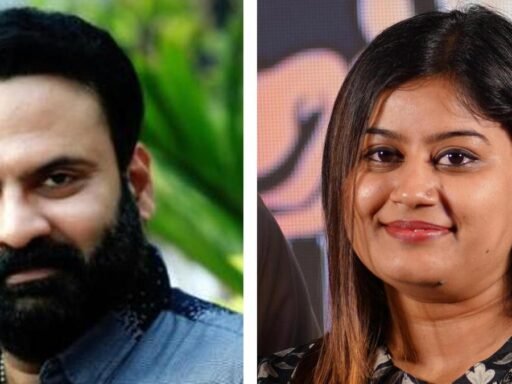
Director Nandini Reddy | Photo Credit: Special Arrangement
Gangster past?
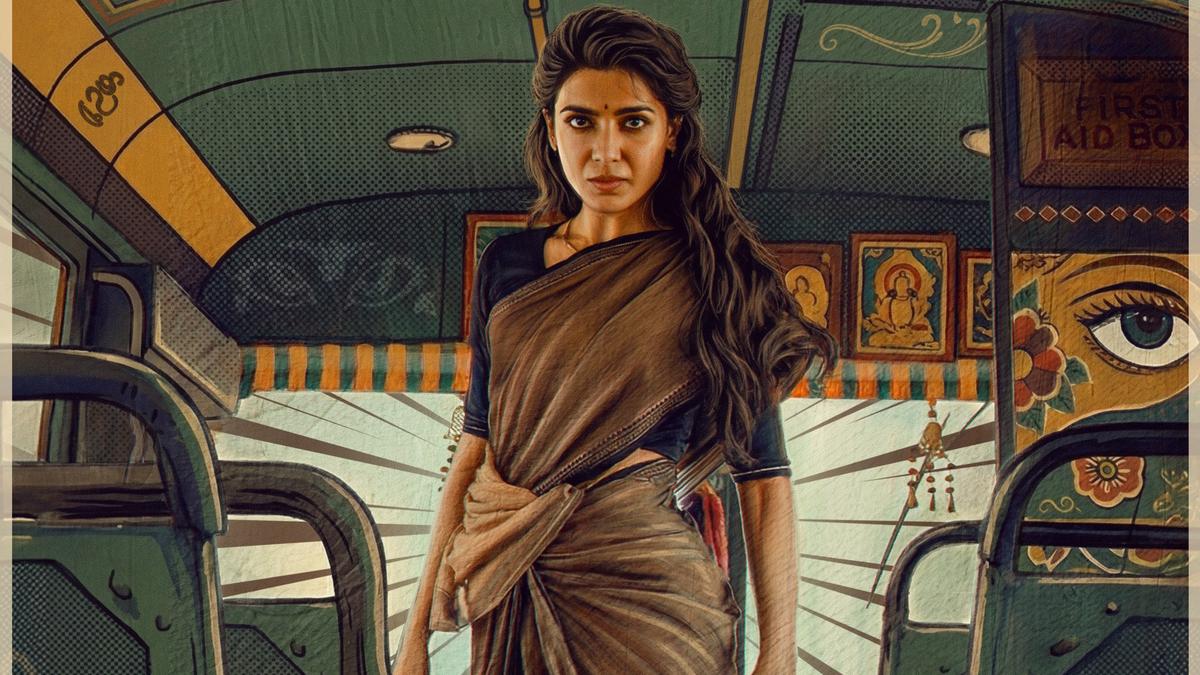
The story originated with Raj Nidimoru, the film’s co-producer, who co-wrote the screenplay with Vasanth Maringanti. Going by the promos, Samantha plays a woman married into a traditional Telugu joint family while concealing a gangster past. Though the setting bears the hallmarks of a family drama, echoes of Rajinikanth-starrer Baashha and, more recently, Lokesh Kanagaraj’s Leo starring Vijay — which drew from A History of Violence — are hard to miss.
Nandini agrees. “We have seen similar stories with male protagonists. A female lead changes the emotional stakes. Her family is unaware of her past. She has to protect them while keeping her identity hidden and grappling with her own guilt. We tell that story with heroism, humour and drama.”
Set in the 1980s, Maa Inti Bangaaram grounds its action in realism while incorporating touches of manga-inspired stylisation. The film marks Nandini’s first foray into large-scale action. She describes it as a steep but rewarding learning experience, particularly while working with action choreographer Lee Whitaker. “It also helped that Raj was on set whenever we needed to troubleshoot,” she says.
A key source of tension is a pivotal character played by Gulshan Devaiah. Nandini says he is far removed from the archetypal villain. “There is a psychological game at play, and he is incredibly precise in how he executes it,” she says.
The film also features a large ensemble cast, including Gautami and Sreemukhi. Nandini is quick to point out that every character serves a purpose. As in her earlier relationship dramas, she says, each role is integral to the story and its emotional arc.
Individuality vs. society
Speaking about the film’s period setting, Nandini says, “Young brides and grooms have traditionally been under pressure to be the ideal husband, wife, mother or father. What happens to a person’s individuality and sense of purpose when they are constantly trying to fit in? When Raj told me this, I knew the story had a relatable core. Setting it in a time before mobile phones adds another layer to the drama.”
While Nandini wrote and directed several of her earlier films, she stepped away from writing on Meera in the Pitta Kathalu anthology and her previous feature, Anni Manchi Sakunamule. She insists, however, that her creative involvement remains unchanged.
“I take writing credit only if I have contributed substantially. Writers deserve their due,” she says. For Maa Inti Bangaaram, the writing team included Raj, Vasanth Maringanti, Sita and Prahas. “Samantha and I would also weigh in.”
Over the past two years, Nandini has collaborated with nearly 15 writers across this film and an upcoming web series for Amazon Prime Video. The shift, she says, followed the lukewarm response to Anni Manchi Sakunamule.
“I realised the story lacked a strong conflict point. This time, I kept questioning whether the story was strong enough and whether the emotions would land.”
For Nandini, those answers often emerge in the edit room. “The edit room exposes you as a filmmaker,” she says. “I take breaks and return to the footage with fresh eyes. I also show it to people who haven’t seen any of it before. Their reactions tell me a lot.”
The process is made easier by editing alongside production. “We shoot in schedules and edit in between. If something isn’t working, we can go back and redo it.”
At both the writing and editing stages, she constantly tries to view the film through the audience’s eyes. “I watch films in theatres to observe how people react and to remind myself why I started making movies,” she says.
The story, she adds, ultimately dictates the rhythm of a film. She has little interest in accelerating the pace simply to cater to shortened attention spans. “I don’t believe in quick cuts for the sake of a reel-obsessed generation. The narrative decides the pace.”
Achilles heel
Reflecting on a 15-year career that spans six feature films, a short film in an anthology and two web series as creator, Nandini says, “The pace at which I work is my Achilles heel. Now that I am collaborating with more writers, I hope to put out more work.” Her next web series, she reveals, ventures into darker territory.
Samantha in the film | Photo Credit: Special Arrangement
For now, however, her attention is firmly on Maa Inti Bangaaram. She is acutely aware of the challenges facing theatrical exhibition, but does not believe the issue is limited to women-led films.
“Cinema always adapts and finds new ways to engage audiences,” she says. “Smaller films like Raju Weds Rambai and Little Hearts have worked. Not everything has to be a big-ticket spectacle with elaborate world-building.”
She points out that several production houses are now investing in smaller, more focused films through dedicated teams. At the other end of the spectrum, AI is making large-scale world-building more accessible than ever before.
Yet, for Nandini, technology and scale remain secondary. “The story is what matters. Everything else is window dressing,” she says.
Before signing off, she cites Sing Geetham as an example. “Look at how a film with a unique concept can still win hearts.”