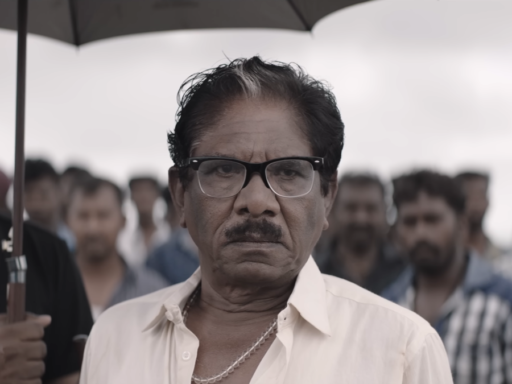

A file image of film director Bharathiraja | Photo Credit: The Hindu
It was his classic signature, one that hinted at another film rooted in Tamil Nadu’s landscape and pulsating with its rural heart. When Bharathiraja passed away on Wednesday (June 10, 2026), Tamil cinema lost one of its greatest auteurs. Ailing at 84, and being heartbroken after losing his son Manoj last year, the director, who launched a multitude of actors and directors, was in his twilight.
Also Read : Bharathiraja passes away LIVE
The Rajinikanth-Kamal Haasan duopoly may have its roots in the K. Balachander school, but it was Bharathiraja who offered them the road not taken through his stellar 16 Vayadhinile, also starring a wonderful Sridevi. The 1977 hit, steeped equally in the innocence and misogyny typical of a village, was the stuff of legend, and it yanked Tamil cinema from the stuffy confines of studios, and made outdoor shooting the preferred norm.
Paddy fields, sugarcane farms and palm trees may have been his preferred background, but the versatile genius could also make a serial killer film, Sigappu Rojakkal, with Kamal doing a villainous turn. Bharathiraja delved into social issues with gusto, he held a mirror, never flinched and his range was broad.
There was women’s emancipation in Pudhumai Penn, the tender romance between an older man and a younger woman in Mudhal Mariyadhai with thespian Sivaji Ganesan and Radha dishing out a bravura performance, and a scathing expose on female foeticide in Karuthamma. The perils of caste were focused upon in Vedham Pudhithu, and equally, Bharathiraja could helm a commercial revenge saga through Oru Kaidhiyin Diary, also remade in Hindi as Aakhree Raasta.
He launched a slew of heroines ranging from Radikaa to Revathi, and had this fetish of renaming his heroines with names starting with R. Actor Karthik too debuted under Bharathiraja in Alaigal Oivathillai. Fine music was intrinsic in this ace director’s movie adventures, and to this day, there is chatter both about Nizhalgal’s script and songs. Be it Ilaiyaraaja or A. R. Rahman, Bharathiraja could tap into their soul and glean their finest creative outputs.
He also inspired his assistant directors to carve their own path, and K. Bhagyaraj, R. Parthiban and Pandiarajan all evolved from the Bharathiraja school of thought. Bhagyaraj, out of reverence, always referred to Bharathiraja as ‘enga director’, and it was a bond that lasted decades.
As age and ailments caught up, Bharathiraja found a second wind in acting. Be it the wily politician in Mani Ratnam’s Ayudha Ezhuthu or the old stuntmaster in Mohan Lal’s Malayalam blockbuster Thudarum, the former director invested gravitas and believability to these characters.
Read more : On the art and science of filmmaking
Supremely aware of his craft and very secure in his domain, Bharathiraja encouraged young talent. Always effusive in his praise, he would say in his unique English: “What a fellow, what a film, look at that climax, the framing, I told myself ‘dei Bharathiraja nee out’.” When he appreciated Mari Selvaraj’s Pariyerum Perumal, it metaphorically signalled the passing of the baton from one rural cinematic master to another peering hard at the Tamil hinterland.
Like the title of one of his hits, Mann Vasanai, Bharathiraja’s films evoked the smell of the soil. As Tamil filmdom lapsed into grief, his films will stand the test of time, reminding us of a man, hailing from the leeward side of the Western Ghats, moving to Madras, while his affectionate gaze remained locked on the villages he left behind.
Published – June 10, 2026 09:10 am IST