

Highlights
- The Yamanaka Legacy: How four genes changed the “one-way street” of cellular biology.
- Partial Reprogramming: The Harvard breakthrough that restored vision without causing cancer.
- Clinical Frontier: The January 28, 2026, milestone marking the first human trial for age reversal.
- The Ethics of Immortality: A warning on “Mortality Inequality” as a future societal crisis.
News Report: The End of Irreversible Aging
Introduction
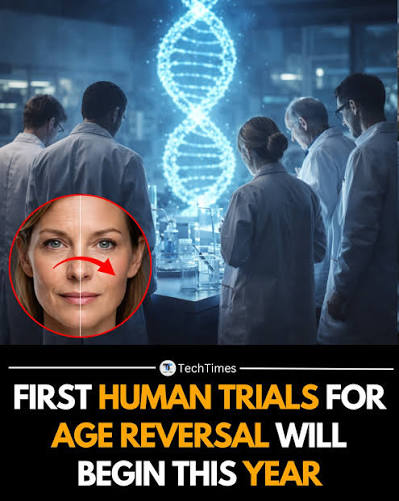
A new era of medicine has officially moved from the laboratory to the clinic. As of January 28, 2026, the science of “Partial Reprogramming”—the ability to turn back the biological clock of a cell without erasing its function—is being tested in living human bodies for the first time.
The Evolution of a Breakthrough
The journey began with Shinya Yamanaka, whose Nobel Prize-winning work in 2006 proved that cells are not “locked” into their identities. By using four specific genes, he showed that an old skin cell could be turned back into a “blank slate” (an embryonic-like state). However, this “total reset” carried a lethal side effect: the risk of cells turning into tumors (teratomas).
Refining the “Fountain of Youth”
The dangerous hurdle of cancer was addressed by researchers in David Sinclair’s lab at Harvard. By dropping the fourth, more volatile gene and using a three-gene cocktail (OCT4, SOX2, and KLF4, known as OSK), they achieved “Partial Reprogramming.” This allows a cell to shed the chemical “noise” of age while retaining its identity. A brain cell stays a brain cell, but its internal machinery functions with the vigor of a youthful state.
Discuss Points:
- The 2020 Vision Milestone: The 2020 Nature paper documented the successful restoration of vision in mice with glaucoma. This was not a slowing of the disease, but a functional reversal of nerve damage.
- Human Trial Launch: On January 28, 2026, Life Biosciences received the green light for the first-in-human trial. The study involves 12 patients receiving a needle-based delivery of OSK genes directly into the eye to treat vision loss.
- The Cost of Life: A primary concern highlighted in the research is the “trajectory of inequality.” Current gene therapies often cost millions of dollars (crores). If this technology remains a luxury, the world faces a shift from wealth gaps to “Mortality Inequality,” where the wealthy can opt out of the aging process entirely.
Technical Verification Summary
| Factor | Detail |
|---|---|
| Pioneer | Shinya Yamanaka (Nobel Laureate) |
| The Formula | OSK (OCT4, SOX2, KLF4) |
| The Mechanism | Partial Epigenetic Reprogramming |
| Trial Date | January 28, 2026 |
| Trial Target | Human Eye (Glaucoma/Vision Reversal) |
| Lead Organization | Life Biosciences |
“The defining question of the next 20 years will not be about wealth, but whether mortality itself becomes a luxury product.”
Note: This report reflects the cutting-edge intersection of Yamanaka’s foundational discoveries and the real-world clinical application currently unfolding in 2026.