


An ad-film producer, he spends most days thinking in frames, shots, and deadlines. Now he is training for another deadline: the London Marathon on April 26, after which he will prepare for the Chicago Marathon on October 11. His upcoming trip is a solo vacation, for some much-needed me-time. While the London marathon is the prime reason he is travelling, he plans to explore the Scottish Highlands for five days.
Sunil is part of a growing tribe of Indian runners planning holidays around races, a trend now referred to as race-cations. Instead of just seeing the tourist sights, they experience countries differently by running through local neighbourhoods while being cheered on by strangers. “I’ve been to cities for work and for travel,” says Sunil. “But what you see when you’re running is totally different. You notice details you’d never catch in a car or train.”
Delhi-based Tanya Gupta, host and founder of The Reckless Collective, started in 2025 — a platform curating sports-led retreats across the globe — is set to host her next guided running retreat from June 19 to 24 in the rainforests of Borneo. Led by Kieren, the programme focusses on helping runners adapt to unpredictable terrain. “Participants receive a curated pre-retreat training plan, along with focussed skill work, endurance sessions, and detailed technique breakdowns, before being guided by an expert athlete on the day of the run,” says Tanya. Beyond running, the year-old company, also offers experiences across sports such as trail-running, kitesurfing, snowboarding, and free diving with past retreats in Sri Lanka and Kazakhstan. Upcoming are Malaysia, Portugal, Egypt and Japan.
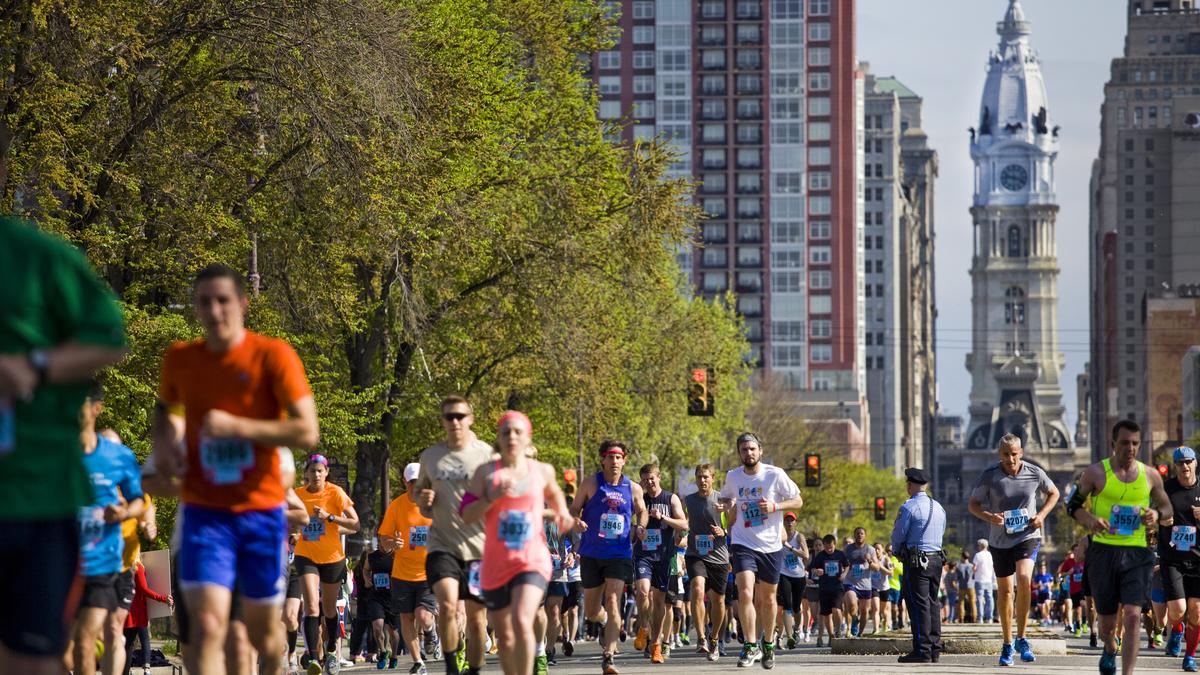
Hotels now advertise proximity to running routes; travel groups curate itineraries around race weekends. | Photo Credit: Philadelphia Convention and Visitors Bureau
The runner-tourist
Social media influencer and long-distance runner Sahirah Oshidar, from Bengaluru, believes travelling specifically for fitness is the next big thing.“Why simply travel, when you can work on your fitness and achieve new milestones on the same vacation?” she says. Sahirah is new to the international running scene, with the Bangkok Marathon on November 16 last year being her first. She describes the energy as electric. This year, she is eyeing Portugal (October 2-3, 2026) and Abu Dhabi (December 12, 2026).
Accor, a multinational hospitality company, in partnership with travel trend forecasting agency Globetrender, published a study in January 2026 by surveying 4,300 travellers across countries, including India, the UK and the US. According to their report, the ‘endorphin economy’ is on the rise and 89% of travellers surveyed said live events like marathons are worth travelling for.
The industry has noticed this shift. Hotels now advertise proximity to running routes, and travel agents curate itineraries around race weekends. Airports are also getting travellers to lace up their shoes. In Hyderabad the Airport Run, held at Rajiv Gandhi International Airport every January, covers 5K and 10K, bringing first-timers and seasoned athletes together. And the annual 5K on the runway at Philadelphia International Airport offers the rare experience of racing right on a tarmac while aircraft take off and land on neighbouring runways.
In India, February offers the stripped-down community-run marathon in Auroville, and the Jaisalmer half marathon, held against sand dunes, forts and the desert festival. In June, runners go to Coorg for the Bison Ultra, set on the steep coffee estates. And if you are game for something even more challenging, try the Ladakh high-altitude marathon, held in Leh.
Daivik Rai, the captain of the Indian indoor cricket team ran the Philadelphia Marathon last year just so he could run in ‘Rocky’s footsteps’ — the 72 stone steps leading to the Philadelphia Museum of Art’s East entrance immortalised in cinema history by Sylvester Stallone. This year America’s 250th Independence Day coincides with 50 years of Rocky, so the city is gearing up for an iconic marathon.
Post-race, many athletes walk straight to the Benjamin Franklin Parkway’s green spaces for cooldowns or recovery stretching, while sports physiotherapy clinics report increased bookings during marathon week. Several clinics offer marathon-specific recovery packages: ice baths, compression therapy and gait analysis, timed perfectly around race weekends.
Some Indian runners are taking the idea much further. They are eyeing extreme environments where travel, endurance and survival blur into one | Photo Credit: Philadelphia Convention and Visitors Bureau
The race to train
Unlike conventional vacations, race-cations come with a lot of structure. There is serious commitment involved: months of training, careful planning, balancing work schedules and budgets. Practising can begin anywhere between one and three months before the race.
Mohammed Suhail, founder of Fit District in Bengaluru, trains both amateur and professional endurance athletes. Not to mention actors like Varun Dhawan and Yash(born Naveen Kumar Gowda). “I ask runners to skip bar hopping and the much-coveted buffet spreads while on a running vacation,” he says. “They are advised to pack their suitcases with electrolytes and protein shakes. And still, they don’t find it restrictive.”
While city marathons dominate the race-cation conversation, some Indian runners are taking the idea further. They are eyeing extreme environments where travel, endurance, and survival blur into one. Ultramarathon runner Kieren D’Souza, currently based out of Manali, and known for competing in sub-zero conditions, represents this edge of the running spectrum. Racing in temperatures that can plunge to –10°C and even –15°C also means you need to acclimatise locally, by practising in places like Jammu or Kashmir.
Kieren is currently in Ladakh training for the upcoming marathon season. “In races that stretch to 100 kilometres or run over 48 hours, it’s as much a mental challenge as a physical one,” Kieren explains. For him, racing in foreign territories is a way to discover how far he can push himself. Of all the races so far, the Yading Skyrace in China, held at an altitude of 4000 metres was the his toughest, and most rewarding, challenge.
Kieren believes that eating right is, in fact, more challenging than the marathon itself. “It’s hard to get your macros in — so I end up eating a good steak on most days, full of fresh veggies and meat. I also make sure I have a lot of fruits tucked into my bags or training kits — it’s refreshing and gives me a good boost of energy.”
For Sahirah, mental strength is as important as physical strength. She believes in a diet of daily meditation before taking on a new running challenge in a new country. “I believe that running outside one’s comfort zone keeps one mentally agile,” she says.
Also read: How India’s long-distance running community coped with the pandemic
Kieren agrees. He reminisces about his first-ever race-cation in 2015 at the prestigious CCC Marathon in the French Alps which is a 100kilometre trail as part of the UTMB Mont Blanc festival. For him, it was a period of getting comfortable with solitude — without his family and friends cheering him on.
He believes that running creates a sense of belonging, even briefly. “You’re keeping pace with people from all over the world,” he says. “Everyone’s struggling together. There’s a shared language, even if you don’t speak to each other.”